


In the use and installation of solar energy storage systems, it is common for users to use machines of different brands in parallel. However, how to combine machines of different brands into a system may confuse many users and even professionals. This article will briefly introduce how to set up the communication between DEMUDA's battery pack and Deye inverter.
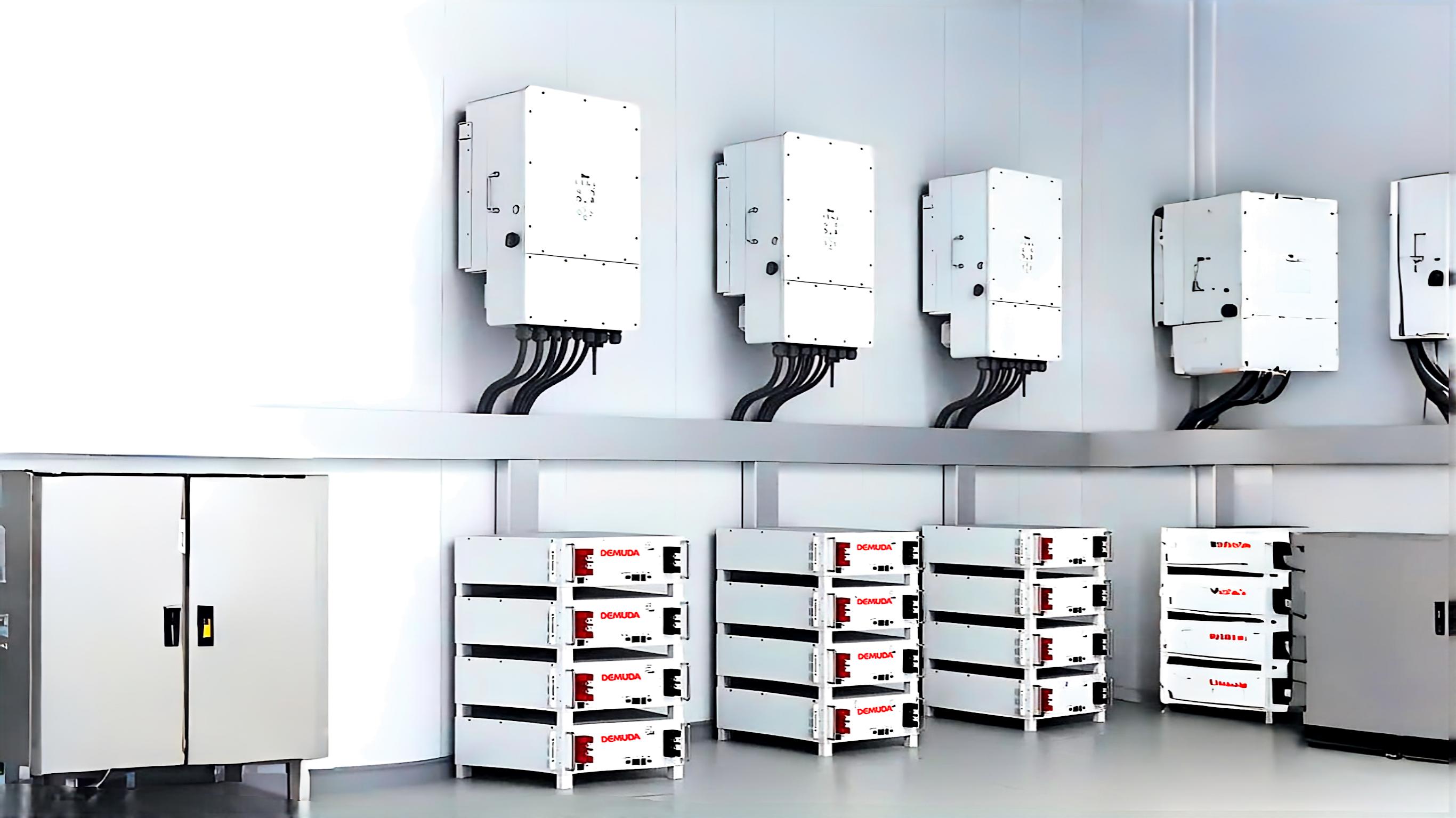
1. Communication technology foundation of DEMUDA battery
(I) Battery core technology and communication architecture
DEMUDA battery (such as 5KWH/10KWH wall-mounted battery, 15KWH lithium iron phosphate power wall, etc.) is equipped with a self-developed battery management system (BMS), which has the following core capabilities:
lData acquisition and processing: real-time monitoring of key parameters such as battery voltage, current, temperature, remaining capacity (SOC), and health status (SOH);
lCommunication protocol integration: built-in RS485, CAN and other industrial communication interfaces
lIntelligent control logic: adjust the charging and discharging strategy according to the inverter instructions to achieve energy optimization distribution.
Taking the DEMUDA 15KWH lithium iron phosphate power wall as an example, its BMS establishes a connection with the inverter through a multi-level communication architecture (physical layer, data link layer, application layer) to ensure the stability and real-time performance of data transmission.
(II) Communication interface and hardware configuration
The communication interface design of DEMUDA battery follows the principles of modularization and compatibility:
Mainstream interface types:
lRS485 interface: supports half-duplex communication, with a transmission distance of up to 1200 meters, suitable for indoor and outdoor distributed systems;
lCAN interface: adopts differential signal transmission, with strong anti-interference ability, suitable for industrial complex environments;
lRS232 interface: supports full-duplex communication, with a transmission distance of usually ≤15 meters, suitable for short-distance, point-to-point communication scenarios (such as local debugging, single-machine device connection).
Hardware compatibility design: The electrical characteristics of the interface meet the input standards of Deye inverter (such as voltage range, impedance matching), and plug-and-play can be achieved without additional adapters.
II. Hardware connection and system integration solution
(I) Communication link construction steps
Take DEMUDA 5KWH wall-mounted battery and Deye three-phase inverter as an example, the connection process is as follows:
1. Physical connection:
·Use shielded twisted pair to connect the battery RS485 interface (A+/B-) and the communication port of the inverter;
·Terminal resistance configuration: Connect 120Ω resistors at both ends of the bus to eliminate signal reflection.
2. Parameter configuration:
·Set communication parameters (baud rate, data bit, check bit) through the inverter touch screen or background software to ensure consistency with the battery BMS;
·Define the communication address (such as battery address is set to 01, inverter address is set to 00) to avoid address conflicts.
3. Protocol test:
·Send Modbus read command (such as 01 03 00 00 00 01 84 0A) to verify whether the battery data is returned correctly;
·Simulate charging and discharging scenarios to observe the inverter's control response time to the battery (typical value <50ms).
(II) System topology
lDepending on the application scenario, DEMUDA batteries and Deye inverters can adopt the following topologies:
lSingle-machine mode: 1 battery + 1 inverter, suitable for home energy storage systems;
lParallel mode: multiple batteries are connected in parallel via the RS485 bus to 1 inverter, supporting capacity expansion;
lCluster mode: multiple inverters and battery packs are networked via the CAN bus and managed uniformly by a central controller, suitable for megawatt-level energy storage projects.
III. Actual application scenarios and benefits
(I) Typical scenario applications
1. Household energy storage system:
lScenario: Solar power generation + energy storage in villa homes, with DEMUDA 10KWH wall-mounted battery and Deye 5KW inverter;
lCommunication value: Realize "peak-valley electricity price difference" arbitrage - battery discharge during peak hours of the grid, charging during off-peak hours, reducing electricity costs by more than 30%.
2. Industrial and commercial microgrid:
lScenario: Distributed photovoltaic + energy storage in industrial parks, using DEMUDA 15KWH power wall and Deye 12KW hybrid inverter;
lCommunication advantage: When the grid is out of power, the inverter triggers the battery to quickly switch to off-grid mode through communication instructions to ensure continuous power supply to key equipment (switching time <200ms).
Conclusion
The efficient communication between DEMUDA batteries and Deye inverters, relying on the deep integration of standardized protocols and customized technologies, realizes the intelligence and reliability of solar energy storage systems. Whether it is economic energy saving in household scenarios or stable power supply for industrial and commercial projects, the collaborative work of the two provides a feasible solution for the optimization of new energy systems. With the iteration of communication technology (such as 5G and edge computing applications), DEMUDA will continue to upgrade product communication capabilities and promote the photovoltaic energy storage industry to a more efficient and intelligent direction.
For more technical details or to obtain communication interface documents, please visit the DEMUDA official website (https://www.dmdsolar.com/) or contact the official technical team.