


With the rapid global popularization of photovoltaic (PV) and energy storage systems, "How long do lithium batteries last?" has become one of the most concerned questions for users. Whether you are planning a residential solar system, upgrading outdoor emergency energy storage, or installing a hybrid inverter and energy storage battery system, the lifespan of lithium batteries will directly affect the overall system performance, operational efficiency, and investment return cycle.
In this comprehensive guide, we will conduct an in-depth analysis of:
●What is the actual lifespan of lithium batteries?
●The core factors determining lifespan
●Why lithium batteries used in PV systems have a longer service life than traditional batteries
●How to extend the service cycle of energy storage batteries
1. How Long Do Lithium Batteries Actually Last?
In the PV energy storage industry, lithium batteries (especially LiFePO₄ lithium iron phosphate batteries) have become mainstream due to their long lifespan, high safety, and large number of cycles.
✅ Lithium Battery Lifespan: 10–15 Years or 3000–6000 Cycles
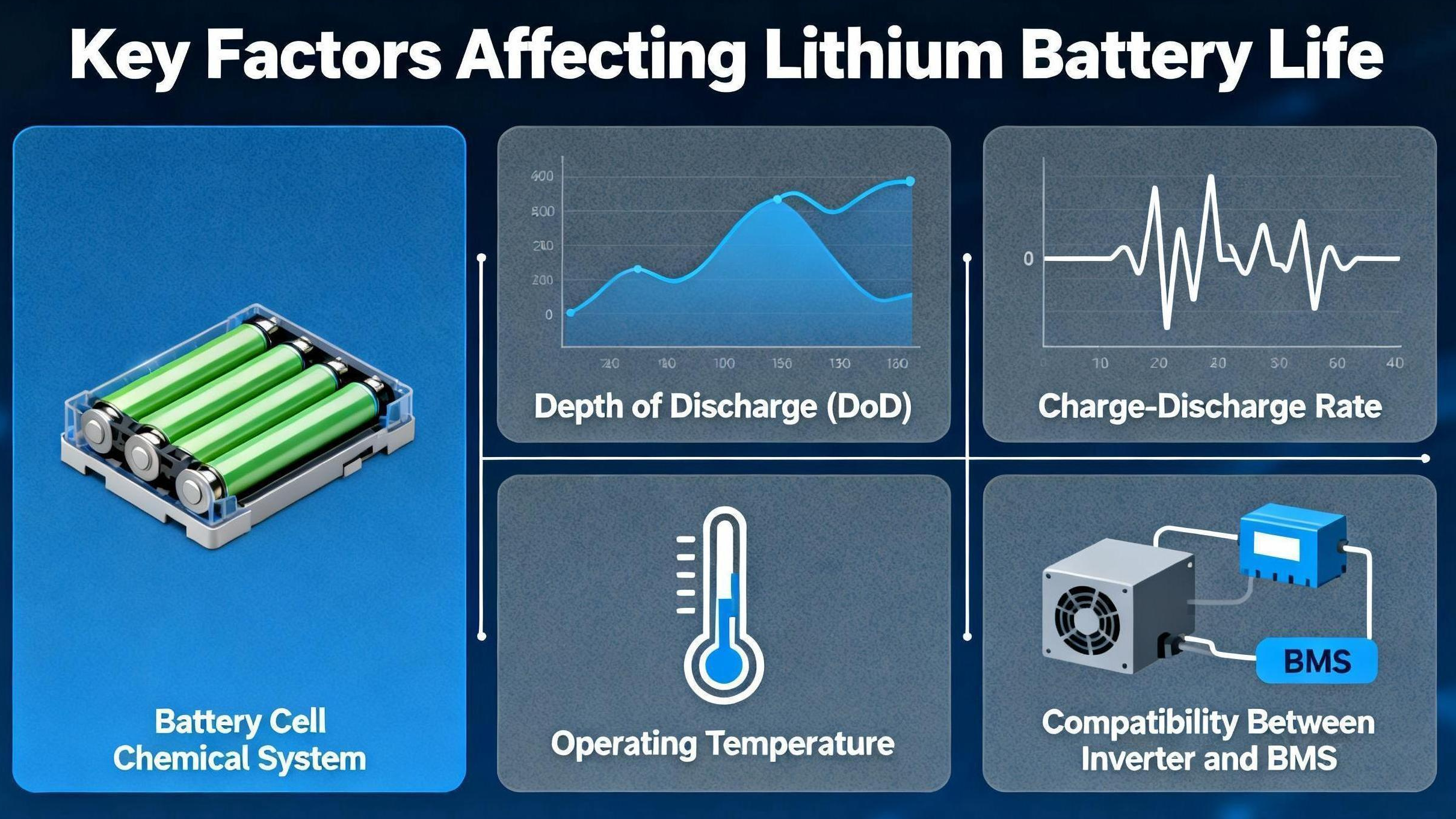
The specific lifespan depends on:
Battery chemical system (Common: LiFePO₄ lithium iron phosphate)
●Operating temperature
●Charge-discharge rate
●Depth of Discharge (DoD)
●Compatibility between inverter and Battery Management System (BMS)
Compared with traditional lead-acid batteries, which only have a lifespan of 2–4 years and 500 cycles, lithium batteries have an extremely obvious advantage.
✅Why Do Lithium Batteries Used in PV Energy Storage Systems Have a Longer Lifespan?
Because the system is usually equipped with:
●MPPT (Maximum Power Point Tracking) solar charge controller for intelligent tracking
●Hybrid inverter or off-grid inverter for precise charging management
●Smart Battery Management System for cell protection
Excellent inverter and battery management strategies can effectively extend the cycle life. This is also why hybrid solar inverters and lithium battery packs from manufacturers such as Growatt, DEMUDA, Deye, GoodWe, and Solis are favored by the market.
2. Key Factors Affecting the Lifespan of Lithium Batteries
2.1 Battery Cell Chemical System
LiFePO₄ (lithium iron phosphate) is currently the most popular and longest-lasting cell solution in PV energy storage systems.
| Battery Type | Cycle Lifespan | Features |
LiFePO₄ (Lithium Iron Phosphate) | 3000–6000 cycles | High safety, long lifespan, good temperature resistance |
Ternary Lithium (NCM/NCA) | 1500–2500 cycles | High energy density |
Lead-Acid/Colloidal Battery | 300–500 cycles | Low cost but short lifespan |
It is recommended to prioritize LiFePO₄ (lithium iron phosphate) for PV energy storage scenarios.
2.2 Depth of Discharge (DoD)
The deeper the depth of discharge, the shorter the battery lifespan.
●⬆︎ High depth of discharge (e.g., 100% DoD): Reduced lifespan
●⬇︎ DoD controlled at 80% or 70%: Can extend the number of cycles by 30–50%
Energy storage batteries from brands such as Growatt, DEMUDA, Deye, GoodWe, and Sungrow mostly support more than 6000 cycles at 80% DoD.
2.3 Operating Temperature
The optimal operating temperature for lithium batteries:
●Charging: 0°C – 45°C
●Discharging: –20°C – 60°C
Long-term operation in a high-temperature environment will accelerate electrolyte aging and shorten the battery lifespan.
Therefore:
●Outdoor energy storage cabinets need to ensure ventilation
●Residential all-in-one systems require BMS (Battery Management System) temperature control function
●Inverters should be kept away from direct sunlight
2.4 Charge-Discharge Rate
The higher the charge-discharge rate, the more heat is generated, and the faster the battery ages.
High-quality solar inverters/hybrid inverters will automatically limit the charge-discharge rate to protect the battery lifespan.
2.5 Compatibility Between Inverter and Battery Management System (BMS)
A professional Battery Management System (BMS) can realize:
●Overcharge protection
●Over-discharge prevention
●Cell voltage balancing
●Temperature control
●Fault protection activation
If the inverter is incompatible with the battery, the following problems will occur:
●Voltage fluctuations
●Chaotic cycle management
●Shortened lifespan
This is why when installing a complete solar + energy storage system, it is necessary to choose products from the same brand or with good compatibility.
3. Lifespan Performance of Lithium Batteries in PV Systems
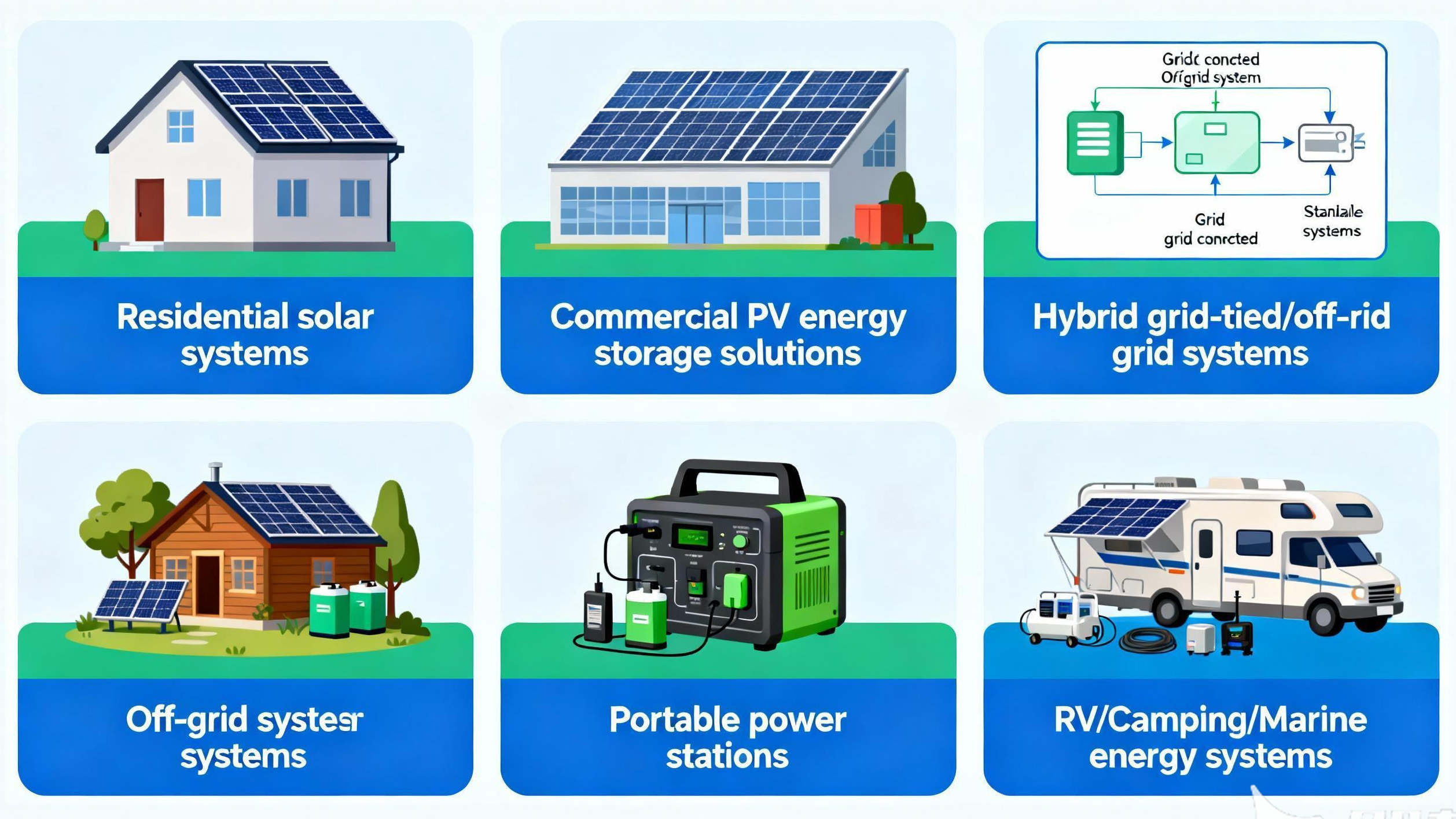
Lithium batteries not only have a long lifespan but also perform excellently in the following application scenarios:
●Residential solar systems
●Commercial PV energy storage solutions
●Hybrid grid-tied/off-grid systems
●Off-grid systems
●Portable power stations
●RV/Camping/Marine energy systems
Detailed introductions are as follows.
3.1 Residential PV Energy Storage Systems
Typical configuration:
●Solar panels
●Hybrid inverter (e.g., 5kW/6kW)
●Wall-mounted lithium battery (5kWh/10kWh)
In such systems:
✔ Lithium Batteries Can Be Used Stably for 10–15 Years
Thanks to:
●Stable temperature environment
●Intelligent charge-discharge management of the inverter
●Regular daily cycles
●Obvious peak-valley load differences
More importantly, residential energy storage systems are often equipped with:
●Time-of-Use (TOU) electricity price function
●Smart Battery Management System
●Backup mode (for power outage backup)
Which further extends the service life.
3.2 Off-Grid Solar Systems
In off-grid scenarios:
More frequent battery cycles
Unstable loads
More extreme ambient temperatures
Therefore:
✔ Lithium Batteries Usually Have a Service Life of 8–12 Years
But they are still significantly better than lead-acid batteries.
Common applications:
●Remote farms
●Outdoor campsites
●Island energy systems
●Military camps
●Mobile medical stations
3.3 Portable Outdoor Power Stations
The number of cycles of such products is usually:
✔ 1500–3500 Cycles (Depending on Brand and Management System)
Due to flexible functions:
●Uninterruptible Power Supply (UPS) mode
●Fast charging mode
●Support for solar charging
Applicable scenarios include:
●Camping
●Outdoor operations
●Emergency backup
●Self-driving trips
●Small-scale residential emergency power supply
Brands such as Jackery (Huabao Xinneng), EcoFlow, Anker Innovations, and DEMUDA are mainstream suppliers.
4. How to Extend the Lifespan of Lithium Batteries?
If you are using a solar energy storage system, the following methods can make lithium batteries last an additional 3–5 years.
4.1 Avoid Deep Discharge
Maintaining 20%–80% State of Charge (SoC) is the optimal lifespan range.
4.2 Keep the Temperature Moderate
Avoid:
●Prolonged exposure to environments above 45°C
●Forced charging at freezing temperatures
High temperatures are more harmful to batteries than low temperatures.
4.3 Use a Compatible Inverter
Especially:
●Hybrid inverters
●Off-grid inverters
●Smart inverters with MPPT
The smarter the inverter, the more friendly it is to the battery lifespan.
4.4 Let the BMS Function Properly
Do not attempt to "bypass the BMS with jumpers", as this will severely damage the battery.
4.5 Use Solar Charging Correctly
●Avoid prolonged floating charging
●Avoid using low-quality charge controllers
●Ensure the PV array is correctly configured with MPPT
5. Signs That a Lithium Battery Is Nearing the End of Its Lifespan
Lithium batteries do not fail suddenly but gradually show the following signs:
Decreased usable capacity
Slower charging speed
Frequent BMS warnings
SOC fluctuations in the inverter
Significantly shortened load endurance
When the capacity drops below 70% of the original capacity, it can be regarded as entering the end of its lifespan.
6. Should You Replace the Battery or Upgrade the System?
If you are considering upgrading the overall system, it is recommended to evaluate the following simultaneously:
●Whether a larger-capacity solar battery is needed
●Whether to upgrade to a hybrid inverter
●Whether to expand the solar panel array
●Whether to install an Automatic Transfer Switch (ATS)
For example:
●5kWh → 10kWh
●3kW → 5kW inverter
●450W modules → 550W high-efficiency solar panels
Upgrading energy storage and inverters can often significantly improve system efficiency and household energy independence.
7. Summary: How Long Do Lithium Batteries Last?
The lifespan of lithium batteries in PV energy storage systems is generally:
✔ 10–15 Years / 3000–6000 Cycles
The main factors affecting lifespan include:
●Battery chemical system
●Temperature
●Depth of discharge
●Compatibility between BMS and inverter
●Application scenarios (grid-tied, off-grid, portable systems)
Whether it is residential energy storage, outdoor power supplies, or commercial solar systems, lithium batteries are the safest, most durable, and most economical long-term energy storage solution.
Need PV Energy Storage Solutions? Welcome to Visit DEMUDA (https://www.dmdsolar.com/)
We provide:
Residential energy storage batteries
Commercial and industrial energy storage batteries/cabinets
Portable outdoor power stations
Inverters (hybrid/off-grid/MPPT)
High-efficiency solar panels
Integrated solar energy storage systems