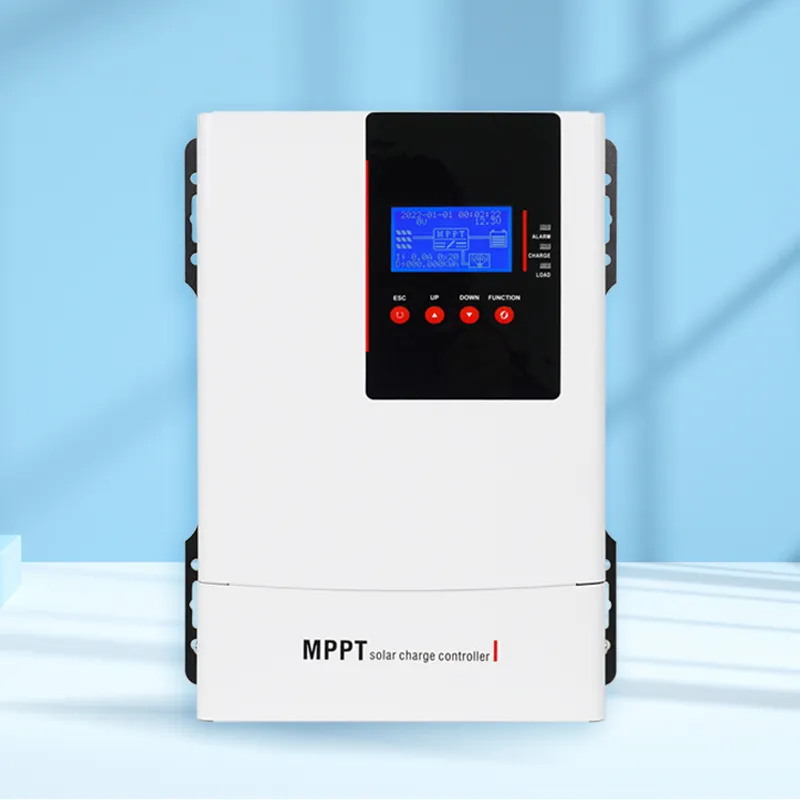


The role of the solar controller
The basic function of the solar controller is to control the battery voltage and turn on the circuit, when the battery voltage rises to a certain extent, stop the battery charging.
Controllers are used in most photovoltaic systems to protect the battery from overcharge or overdischarge. Overcharge may vaporize the electrolyte in the battery, causing failure, and battery overdischarge will cause premature battery failure, overcharge and overdischarge may damage the load, so the controller is one of the core components of the photovoltaic power generation system, but also the main part of the balance system BOS (Balance Of System).
In simple terms, the role of solar controllers can be divided into:
1. Power adjustment function.
2. Communication function: simple indication function and protocol communication function, such as RS485 Ethernet, wireless and other forms of background management.
3. Perfect protection function: electrical protection, reverse polarity protection, short circuit protection, overcurrent protection, overcharge protection, overdischarge protection, etc.
The difference between solar controllers
Popular solar controllers on the market mainly include ordinary solar controllers, PWM solar controllers and MPPT solar controllers.
The working principle of ordinary solar controller is to directly hang the output of the solar panel to the battery port, and disconnect it when the battery is sufficient, because of the internal resistance of the battery, it is difficult to fully charge the battery, and the solar panel is not fully utilized, and the charging conversion efficiency is only 70-76%.
PWM refers to pulse width modulation, PWM solar controller uses the digital output of the microprocessor to control the analog circuit, is a method of digital encoding of analog signal electricity. Controlling the analog circuitry digitally can significantly reduce the cost and power consumption of the system, and the charging conversion efficiency is 75-80%.
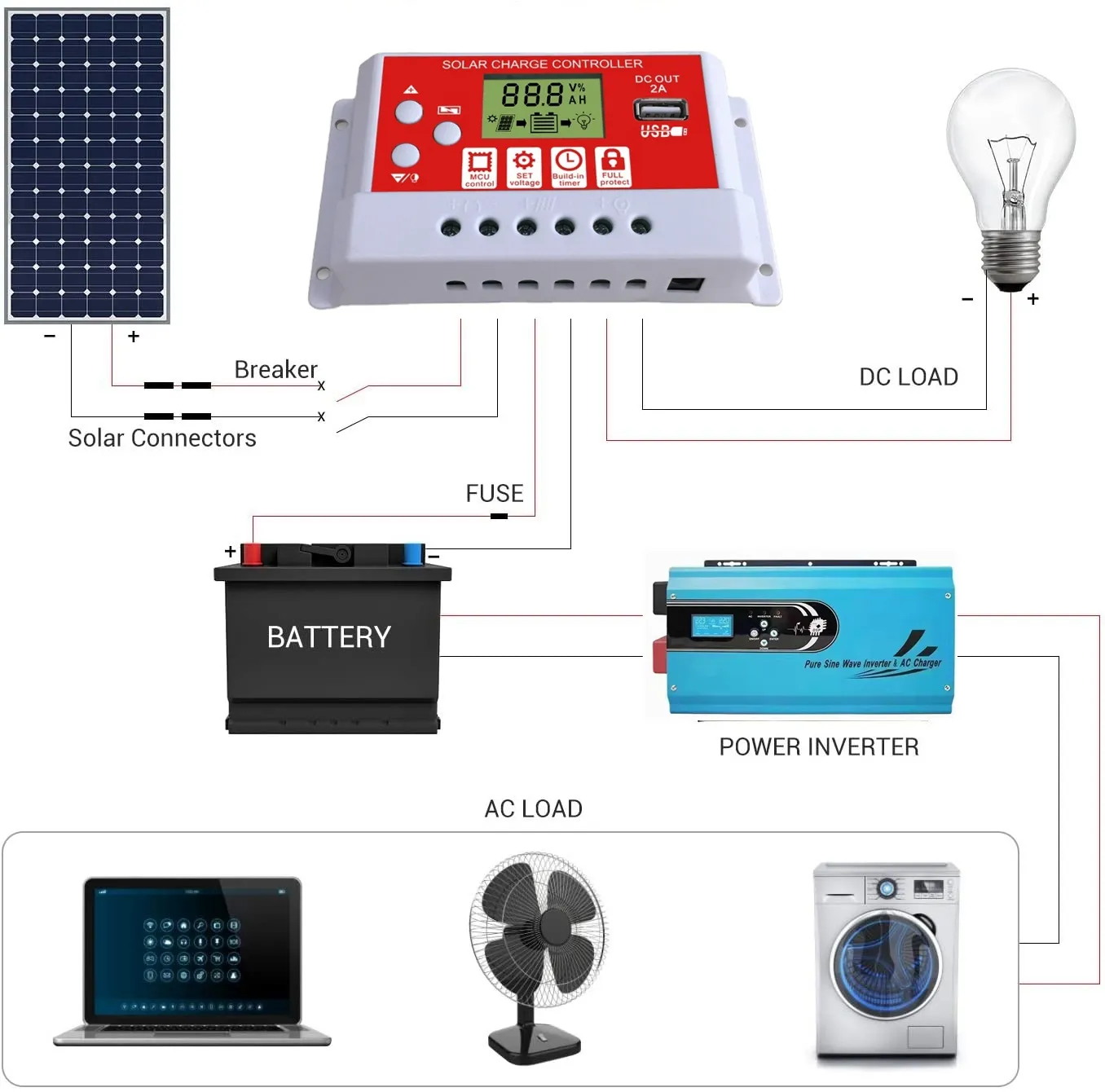
MPPT (Maximum Power Point Tracking) refers to the maximum power tracking, MPPT solar controller can detect the power generation voltage of the solar panel in real time, and track the highest voltage and current value (VI), so that the system charges the battery with the maximum power output, MPPT tracking efficiency is 99%, and the power generation efficiency of the whole system can be as high as 97%.