


In a residential photovoltaic system, the inverter is the key equipment that determines power generation efficiency. To maximize the power generation of residential solar inverters, you only need to do a good job in four aspects: model selection, installation, settings, and operation and maintenance, which can significantly improve power generation benefits.
The hardware performance and adaptability of the inverter are the first threshold that determines the upper limit of power generation. Improper selection will lead to problems such as low power generation efficiency, high loss, and fault shutdown even if the panel power is sufficient.
Peak efficiency, European efficiency, and Chinese efficiency are core indicators for measuring inverter power generation capacity. High-quality residential solar inverters can achieve a peak efficiency of more than 98.6% and a European efficiency of more than 97.5%, with lower conversion losses and higher power generation under the same sunlight conditions. In long-term operation, every 0.5% increase in efficiency can increase annual power generation by hundreds of kilowatt-hours, resulting in a significant gap in benefits.
MPPT (Maximum Power Point Tracking) is the core technology for inverters to improve power generation, especially affecting power generation performance in low-light environments such as cloudy days, early mornings, and evenings. Choose an inverter with MPPT efficiency ≥99.9% and fast response speed to quickly lock the optimal operating voltage and reduce power loss. Independent multi-channel MPPT can avoid mutual interference between panels of different orientations and power levels, effectively reduce power loss caused by shading, and improve low-light power generation by 10%–20%.
The common matching ratio of panels to inverters in residential photovoltaic systems is 1:1.1 to 1:1.3. Excessively high configuration will cause frequent power limiting of the inverter, leading to lower power generation instead; an oversized inverter will increase no-load loss and reduce light-load efficiency. At the same time, choose a single-phase or three-phase model according to household electricity consumption to ensure that the voltage level and output frequency are fully compatible with the home power grid.
Hybrid inverters can realize direct PV charging, energy storage discharging, peak shaving and valley filling, and backup power supply. They store excess power during peak PV generation periods for release at night or during peak electricity consumption, greatly improving the self-consumption rate, reducing waste of surplus power, and maximizing the overall power generation benefits of the system.
Many residential systems fail to meet expected power generation due to non-standard installation and wiring. A scientific installation method can reduce losses from the source and ensure long-term efficient operation of the inverter.
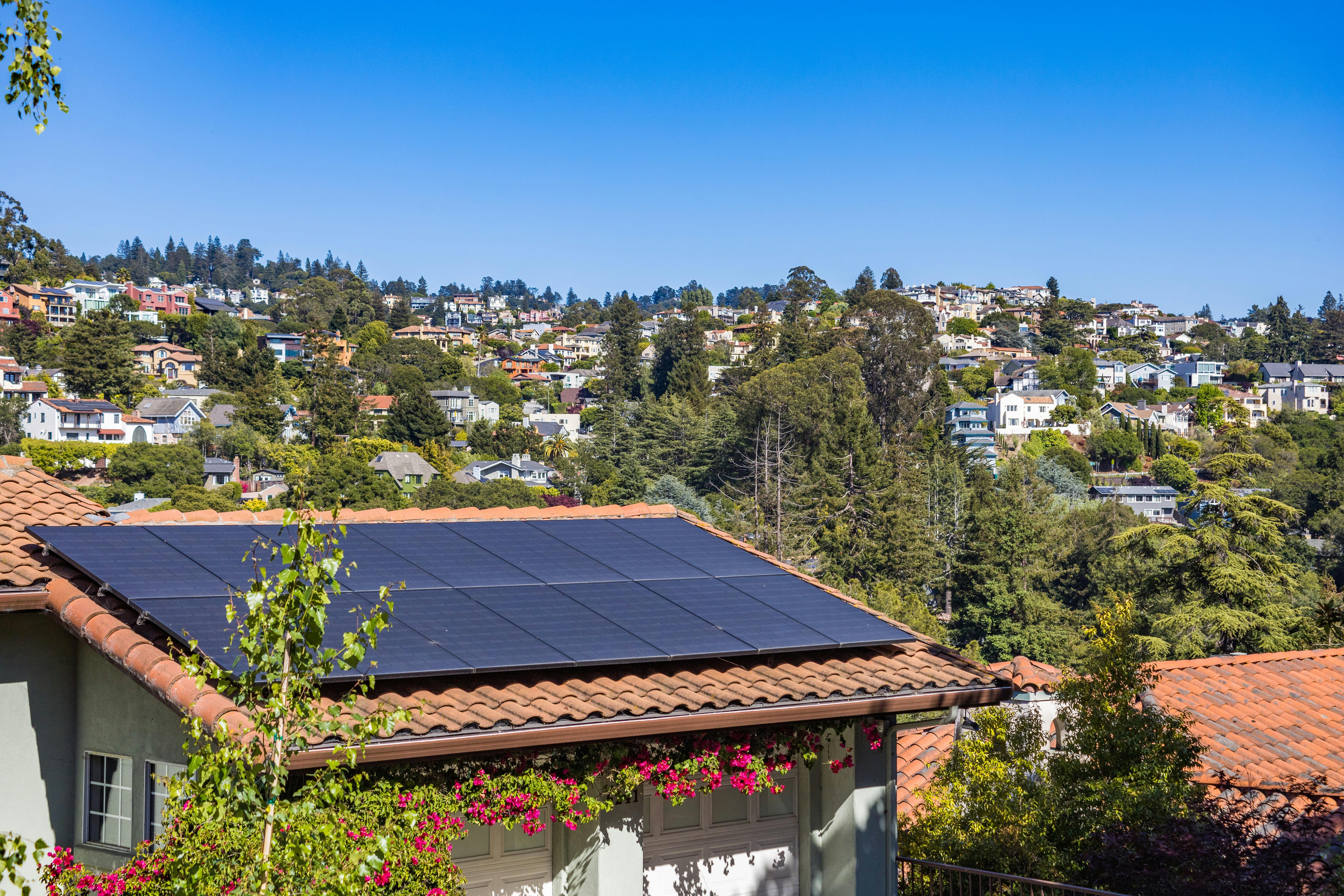
For the Northern Hemisphere, due south orientation is preferred, and the optimal tilt angle is set according to the local latitude to maximize solar radiation absorption. Avoid east or west deviations that shorten effective power generation hours and affect all-day power generation.
Panels should be installed away from shading objects such as trees, eaves, chimneys, and antennas. Keep a reasonable spacing between arrays to prevent the "bucket effect" caused by shadows, which drags down the power of the entire string. Local shading will cause a sharp drop in power of the corresponding MPPT circuit, which is a common cause of power loss in residential systems.
Shorten cable length and use appropriate wire gauges to reduce line resistance loss; do not connect panels of different orientations, power levels, and types to the same MPPT circuit to avoid efficiency degradation caused by power mismatch. Cable connectors must be firmly sealed to prevent loosening, oxidation, and overheating that cause potential safety hazards and power loss.
Install the inverter in a cool, ventilated place without direct sunlight to avoid overheating protection and automatic power derating caused by high temperature. In high summer temperatures, poor heat dissipation can cause efficiency loss of 5%–10% for the inverter, and good ventilation can effectively avoid such problems.
Standardized grounding, lightning protection, and insulation treatment can reduce the risks of lightning strikes, electric leakage, and insulation failures, reduce unplanned downtime, and ensure continuous and stable power generation.
Correct inverter parameter settings and coordinated system operation can further tap into power generation potential and improve efficiency and self-consumption rate.
Enable the optimal MPPT operating mode, adjust the voltage operating range according to seasonal temperature changes, adapt to panel temperature coefficients, and maintain efficient operation in different environments throughout spring, summer, autumn and winter. Set a reasonable start voltage to improve low-light power generation in the early morning.
Set the power upper limit and anti-reflux function in accordance with local grid policies to avoid power interruption caused by protection shutdown, ensure stable grid-connected power generation, and waste no power generation hours.
When paired with energy storage batteries, set reasonable charging power, cut-off voltage, depth of discharge and other parameters to avoid overcharging and over-discharging, improve battery cycle life and charge-discharge efficiency, and maximize the utilization of photovoltaic power.
Use the supporting monitoring system of the inverter to view real-time power, power generation, efficiency, voltage, current and other data, detect and troubleshoot anomalies in a timely manner, prevent minor problems from turning into major ones, and reduce downtime losses.
Residential photovoltaic systems are designed with a service life of up to 25 years. Good maintenance can prevent efficiency attenuation and ensure long-term stable and efficient power generation.
Remove dust, bird droppings, leaves, snow and other obstructions from the panel surface to maintain high light transmittance. The improvement of power generation in low-light weather is particularly obvious after cleaning. It is recommended to clean every 3–6 months, and increase the frequency appropriately in heavily polluted areas.
Tighten DC and AC wiring terminals, check for cable aging and damage, and prevent increased loss and potential safety hazards caused by poor contact, overheating and electric leakage.
Manufacturers optimize MPPT algorithms, protection logic and operating strategies through firmware updates. Timely updates can improve inverter efficiency and stability to maintain optimal operating conditions.
If there is a sudden drop in power generation or abnormally low efficiency, promptly investigate causes such as panel shading, inverter faults, and wiring problems to quickly restore efficient power generation.
Maximizing the power generation of residential solar inverters is core: select high-efficiency models, standardize installation, set reasonable parameters, and perform regular maintenance. By doing these well, the photovoltaic system can stably generate more electricity for a long time, reduce electricity costs, and achieve higher household energy benefits.