

Have you ever installed solar panels and found that the actual power is far below the rated value? Watching the fluctuating power data on the device, many people can’t help wondering whether they have bought products with false labeling. In fact, this is not an isolated case, but a common phenomenon faced by solar panel users worldwide.
The rated power of a solar panel is a theoretical peak parameter measured under the unified industry STC standard (Standard Test Conditions), and it also serves as the calibration benchmark for all brands and models of solar panels globally. The standard test conditions are defined as solar irradiance of 1000W/m², cell temperature maintained at a constant 25℃, with no shading, overheating or dust coverage——an almost ideal laboratory environment. In real outdoor scenarios, temperature differences between day and night, sunny and rainy weather, as well as dust accumulation and natural wear over time will all cause a decline in actual power output. Through professional installation design, system adaptation and routine maintenance, we can minimize various power losses and make the actual generating efficiency of solar panels approach the theoretical maximum value.
1. Professional Installation Design
The installation process is the first key factor affecting solar panel power generation efficiency. Improper installation may directly cause an efficiency loss of 10%-30%, which is one of the core reasons why the actual power fails to approach the rated standard.
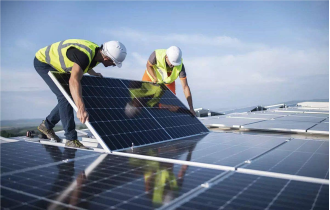
1) Orientation and Inclination Optimization:The power generation efficiency of solar panels is directly related to the sunlight incident angle. When sunlight irradiates the panel vertically, the power cells absorb the maximum energy and achieve the highest generating efficiency. During installation, the inclination angle should be adjusted to the optimal local value according to regional latitude, ensuring sunlight shines nearly vertically on the panel at noon throughout the year. For areas in the Northern Hemisphere, south-facing installation is preferred to obtain the longest sunshine duration and avoid shortened lighting time caused by east or west orientation. Meanwhile, appropriately adjusting the inclination angle according to the solar altitude angle in different seasons can improve the utilization rate of low-angle sunlight in winter, enabling solar panels to capture sufficient light all year round.
2) Eliminate Light Shading:Even a small area of shadow, dust or fallen leaves may form partial shading on solar panels and trigger the hot spot effect. When part of the cells are shaded, they change from power generating units into loads that consume electricity generated by normal cells. This will not only greatly reduce the overall power output of the solar panel array, but also cause local overheating and damage the cells, shortening the service life of the product. Therefore, before installation, it is necessary to check potential shelters such as surrounding buildings, trees, power lines and outdoor air conditioning units, ensuring no shading during peak sunshine hours. Keep the panel surface flat during installation to avoid water and dust accumulation caused by uneven mounting, eliminating hidden shading risks from the source.
3) Temperature Control:The power generation efficiency of photovoltaic cells decreases significantly as temperature rises. Industry data shows that the power output drops by approximately 0.3%-0.5% for every 1℃ increase in cell temperature. In summer outdoor environments, the surface temperature of solar panels often exceeds 50℃, far higher than the 25℃ specified by the STC standard, which is a major cause of actual power being lower than the rated value. To reduce high-temperature power loss, reserve sufficient ventilation gaps on the back of solar panels during installation. Avoid mounting panels closely against the roof, wall or ground, and allow air convection to dissipate heat. In regions with extreme summer heat, overhead installation or heat dissipation brackets are recommended to further lower the operating temperature of cells and maintain stable power generation efficiency.
2. System Adaptation Optimization
As power generating devices, solar panels cannot work independently. They need to form a complete system together with controllers, inverters and energy storage power supplies. The matching degree of each device directly affects the transmission and conversion efficiency of electric energy, and an unmatched system may lead to massive power loss during transmission.
1) Adopt Controllers or Inverters with MPPT Function:The output voltage and current of solar panels fluctuate with sunlight intensity and ambient temperature. Maximum power output can only be achieved when the panels operate at the Maximum Power Point. MPPT (Maximum Power Point Tracking) technology can real-time monitor the output voltage and current of solar panels, dynamically adjust the operating point through algorithms, keep the panels running at maximum power output, and effectively improve the actual power generation efficiency by more than 20%.
2) Avoid Mismatched Components:When multiple solar panels are connected in series or parallel, the overall efficiency of the system is limited by the panel with the lowest parameters, known as the bucket effect in photovoltaic systems. If panels with inconsistent parameters, old and new models or different specifications are mixed in series, the low-parameter panels will limit the current of the entire string, preventing high-performance panels from exerting their full capacity. It is recommended to adopt solar panels of the same model and batch, and control the parameter error within the industry standard range.
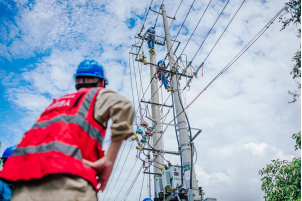
3) Optimize Cable Selection and Wiring:Direct current generated by solar panels needs to be transmitted to other devices via cables. The wire gauge, length and material of cables will affect transmission efficiency. Overly thin cables will generate heat loss due to excessive resistance, while excessively long cables will cause voltage drop and reduce the power reaching terminal equipment. Therefore, select copper cables with appropriate wire gauge according to the total current and transmission distance of solar panels, shorten cable length as much as possible and reduce unnecessary connectors. All joints shall be treated with waterproof and anti-oxidation measures to avoid extra power loss caused by poor contact.
3. Regular Maintenance
Solar panels mostly operate in outdoor environments, where dust, rainwater and extreme weather will affect their performance. Regular maintenance can not only keep the panel surface clean, but also troubleshoot equipment faults in a timely manner, preventing drastic efficiency drops caused by minor problems.
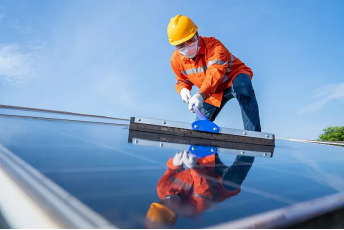
1) Regular Cleaning to Stabilize Light Transmittance:Contaminants attached to the panel surface will reduce light transmittance and directly lower power generation efficiency. In sandy and dusty areas, dust accumulation on panels may reduce efficiency by 10%-20%; snow coverage will completely block sunlight and suspend power generation. During cleaning, avoid scratching the panel surface with hard objects to prevent damage to the coating film.
2) Regular Troubleshooting of Hidden Risks:Controllers, inverters, wiring terminals and other equipment operate outdoors for a long time, which may suffer from loose wiring, aging cables and equipment failures. These problems will reduce the power generation efficiency of solar panels and even bring potential safety hazards. Conduct regular inspections and check equipment operating data, compare actual power generation with theoretical values, and correct abnormalities in a timely manner to avoid power generation interruption or efficiency loss caused by equipment faults.
3) Adjust Installation Details According to Environmental Changes:Seasonal changes bring variations in sunlight angle, ambient temperature and precipitation, all of which affect solar panel efficiency. In hot summer, enhance ventilation and heat dissipation for solar panels; in winter with low solar altitude, adjust the installation inclination to improve light utilization. After rainy seasons, clean up ponding and silt on the panel surface to maintain cleanliness, ensuring solar panels maintain high efficiency in all seasons.
Restricted by natural conditions, solar panels cannot maintain the rated power output for 24 hours a day. This is determined by the physical characteristics of photovoltaic products and the complexity of outdoor operating environments, and does not mean poor product quality or false power labeling. Scientific and regular routine maintenance is the key to solving insufficient power generation. It can minimize all kinds of power losses, enable solar panels to output power stably for a long time, fully release the generating value of each panel, and bring more considerable economic benefits to users.