


Researchers at the University of Rochester have recently achieved a notable breakthrough in solar thermoelectric power generation. By optimizing thermoelectric material structures and temperature gradient management, they have significantly improved the energy conversion efficiency of a novel thermoelectric device — sparking renewed discussion around this niche solar technology. Some in the industry are now asking: could upgraded thermoelectric power generation eventually replace conventional PV and become the next mainstream solar solution?
The answer, based on real-world deployment readiness, technological maturity, and market adaptability, is no.
Solar power technologies generally fall into two categories: PV, which is already widely deployed, and solar thermoelectric generation, which is still awaiting large-scale commercialization. Both harness solar energy, but their energy conversion logic is fundamentally different — and that difference ultimately determines their commercial viability.
PV relies on the well-established photovoltaic effect, converting sunlight directly into electricity. The process requires no intermediate medium, no mechanical moving parts, and no unnecessary energy loss. With only sunlight, PV modules produce usable electricity, and together with inverters and storage, form a stable power supply.
Solar thermoelectric generation — whether mature CSP plants or novel semiconductor thermoelectric devices — follows an indirect “light → heat → electricity” path. CSP plants use mirrors to concentrate sunlight, heat molten salt, and drive steam turbines — requiring massive equipment and complex maintenance. Newer thermoelectric material devices rely on a large temperature difference between hot and cold sides to generate power, but the materials are expensive. Every extra conversion step adds losses. This inherent complexity has been a fundamental weakness from the start, and even the latest optimization cannot resolve the core issues of low efficiency and difficult real-world deployment.
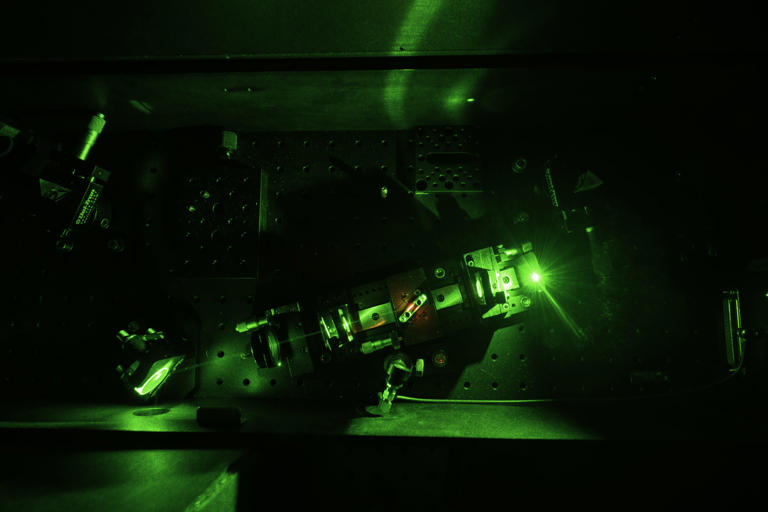
The Rochester breakthrough is real, but it remains strictly laboratory-grade. It demands highly controlled light, temperature, and operating conditions. In outdoor environments, performance would drop sharply. More importantly, the advance improves only conversion efficiency — it does not solve the fundamental barriers of high material cost, rapid aging, or maintenance complexity. At best, it offers new technical possibilities for very niche applications such as aerospace, military, or specialized industrial heat recovery — not a replacement for mass-market residential or commercial power generation.
In contrast, PV has gone through decades of iteration and global field validation. It has built a complete, mature industrial chain from raw materials to installation. That is the foundation of PV‘s long-standing leadership.
On stability, today’s mainstream crystalline silicon PV modules are technologically mature, manufactured to high standards, and highly weather-resistant. They perform reliably under extreme heat, cold, wind, dust, and humidity. Standard PV systems last 25 years or more, require almost no complex maintenance, and stay efficient with only basic cleaning.
On efficiency, the gap is even wider. Even after the latest lab breakthrough, the best thermoelectric efficiency remains far behind commercial PV. Standard PV modules on the market today deliver 18–22% conversion efficiency in real outdoor conditions — no special environment required. Thermoelectric‘s high efficiency exists only in the lab. In practice, its output is too low to meet residential or commercial power demand.
On cost, PV‘s advantage is overwhelming. Global mass production has driven down prices across the full supply chain — panels, inverters, mounting structures, storage — as well as installation and maintenance costs. Whether for large utility-scale plants or residential and commercial distributed systems, PV offers excellent return on investment.
On application versatility, PV is highly flexible. It can be scaled up or down to fit nearly any scenario — from portable power packs and rooftop residential systems to commercial rooftops and desert utility plants. PV works for grid-tied, off-grid, and storage-integrated applications alike.
Technological exploration is always valuable. The thermoelectric breakthrough is a positive step and offers new ideas for niche applications. But we must be clear: a lab breakthrough is not commercial readiness, and a performance upgrade is not a replacement for a mature technology.
For the vast majority of users, choosing a solar energy solution means choosing one that is stable, reliable, and cost-effective. By that measure, PV remains the clearest answer the market offers.