


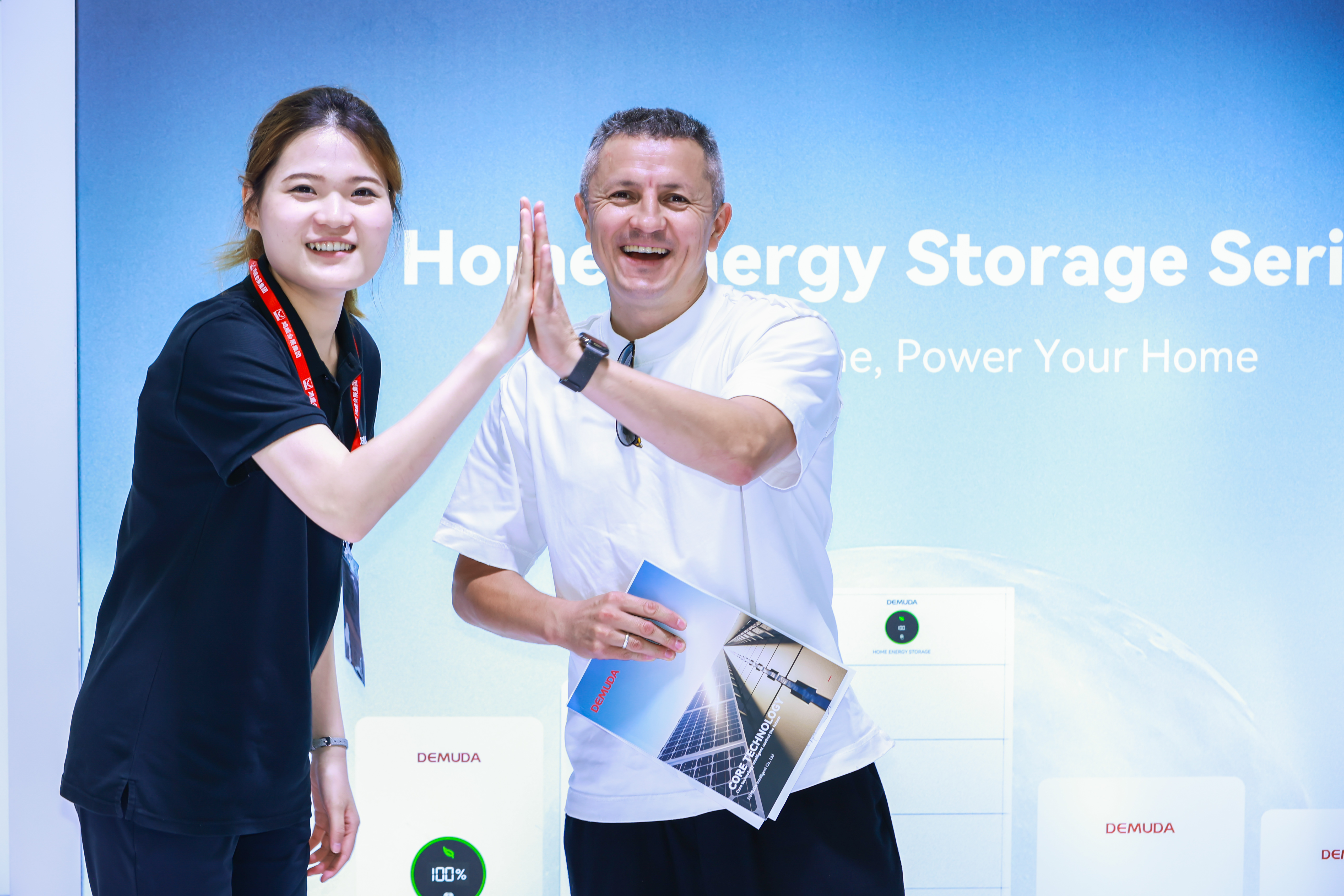
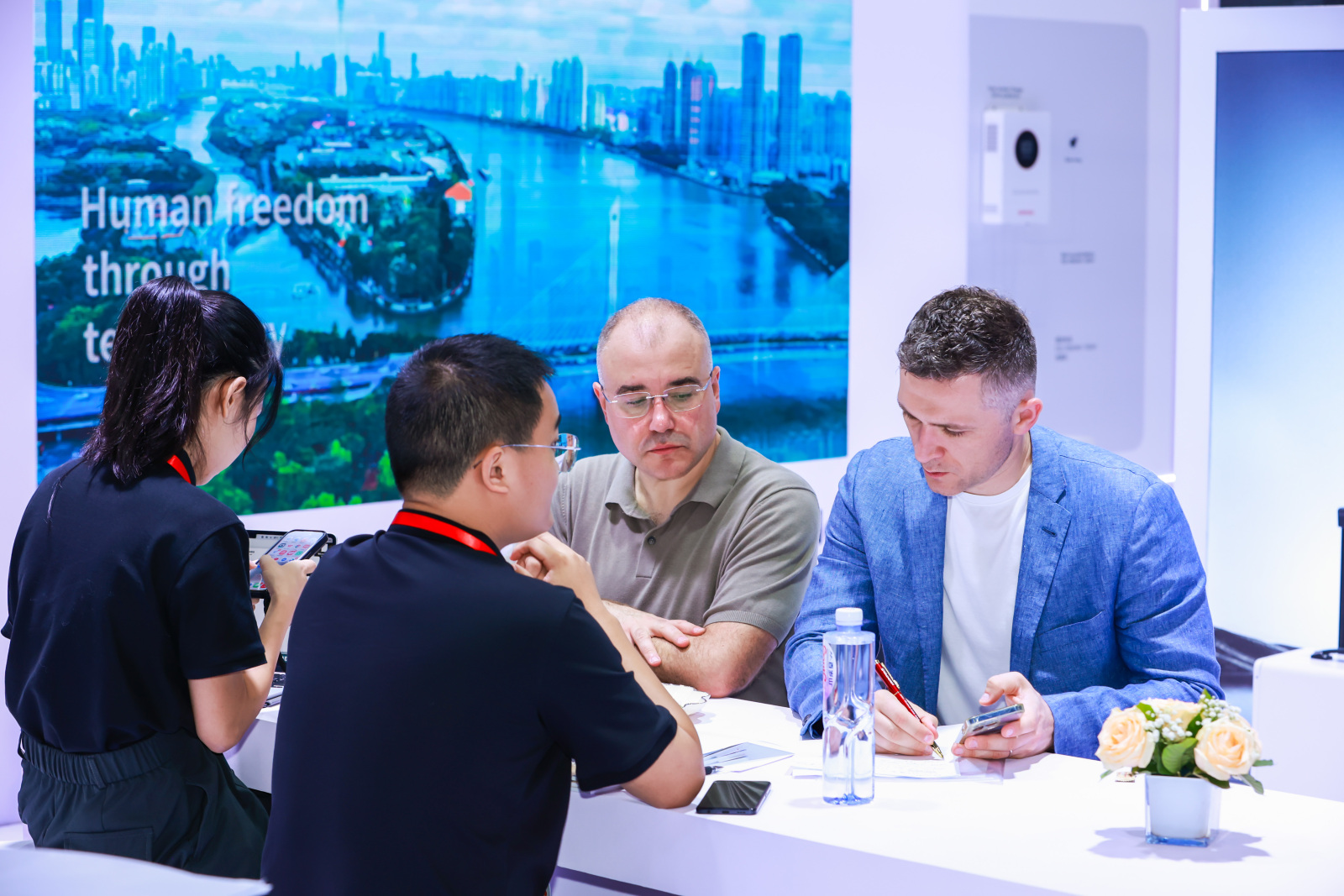
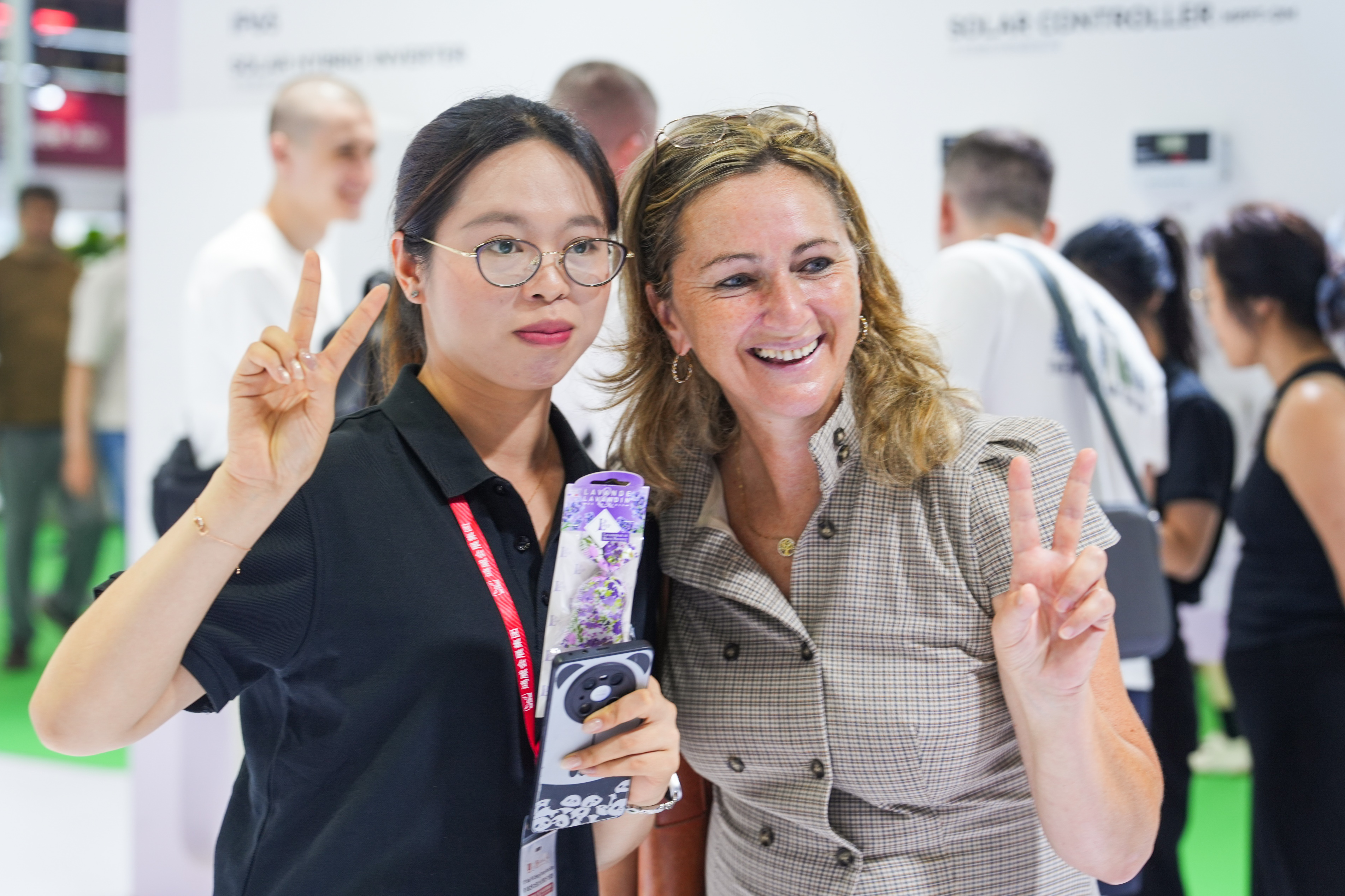
From September 16 to 18, 2026, the 18th Solar PV & Energy Storage World Expo (Solar PV World Expo 2026 — widely known in the industry as PV Guangzhou) took place at Zone B of the Canton Fair Complex in Guangzhou. DEMUDA exhibited across seven product families — solar inverters, energy storage batteries, all-in-one inverter-storage systems, solar charge controllers, solar panels, portable power stations and battery chargers — and spent three days in extended conversations with customers and partners from different countries and regions on product performance, application scenarios, system design and market requirements.
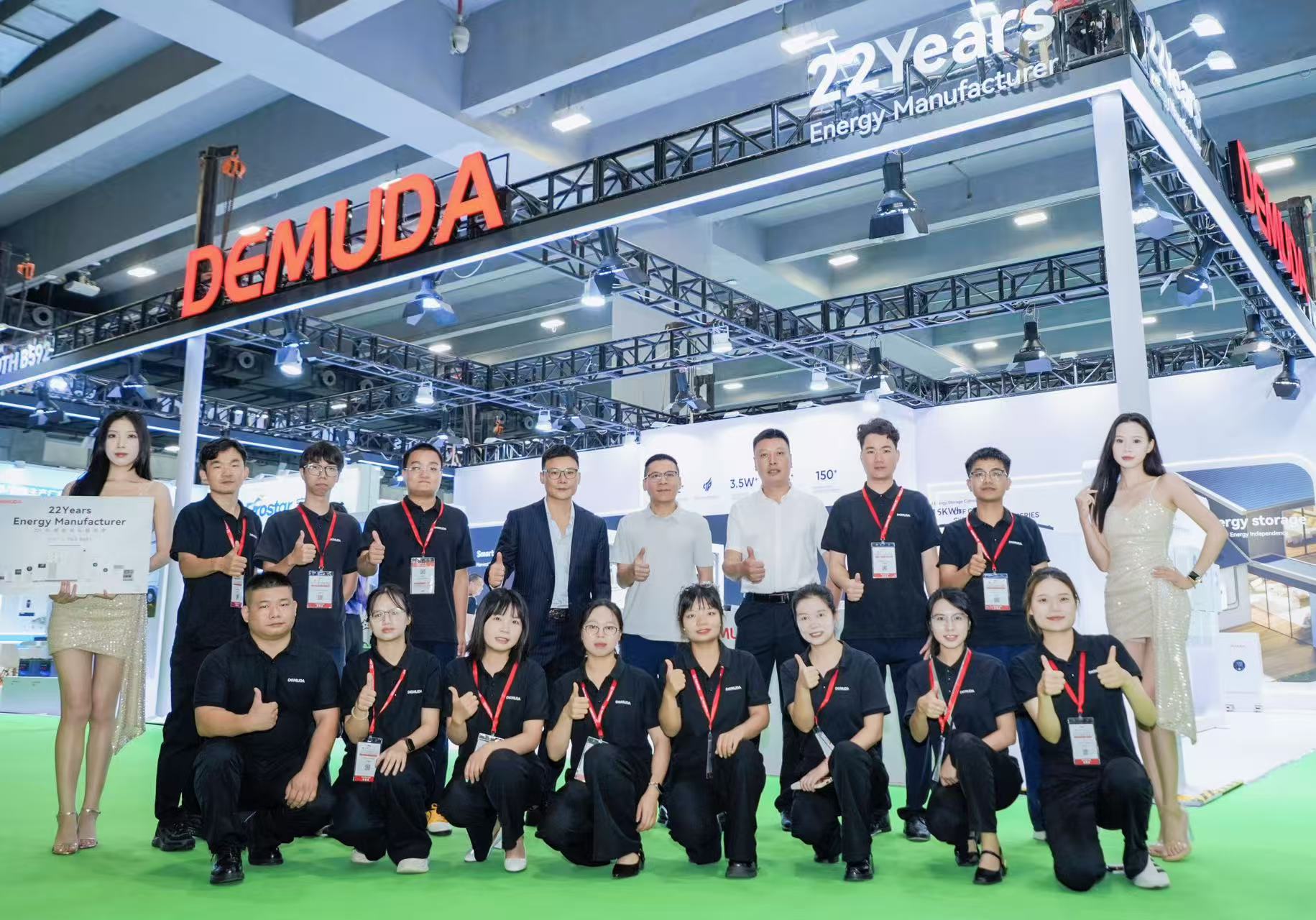
The Solar PV & Energy Storage World Expo grew out of the Guangzhou International Solar PV & Energy Storage Exhibition, was upgraded and renamed in 2020, and reached its 18th edition in 2026. According to the organizer's official website, the exhibition has now run for 17 consecutive editions with a cumulative exhibition area of more than 700,000 square meters, drawing over 7,000 domestic and international companies, with more than one million professional visitors in total and over 200,000 visitors at the most recent edition.
The 2026 edition expects more than 2,000 exhibitors, an exhibition area of 180,000 square meters, professional visitors from over 100 countries and regions, and an audience of more than 200,000. The product scope runs from solar cells, modules, mounting systems and inverters through to storage cells and packs, BMS, EMS, PCS, storage containers, and both residential and C&I battery cabinets. In other words, the entire chain from generation to storage to consumption sits under one roof — which is why export-oriented solar and storage companies use it both to meet peers and to meet buyers from many markets in a single trip.
DEMUDA was founded in 2011 and focuses on the R&D, production and sales of solar inverters, controllers and energy storage batteries, as well as grid-connected, off-grid and hybrid solar systems, serving residential, industrial, commercial and utility customers with integrated solutions that include smart energy management. The company's range is organised into seven product families, matching the product navigation on its own website; the booth concentrated on the inverter, battery and all-in-one side of that range, and the sections below follow the full seven-family structure.
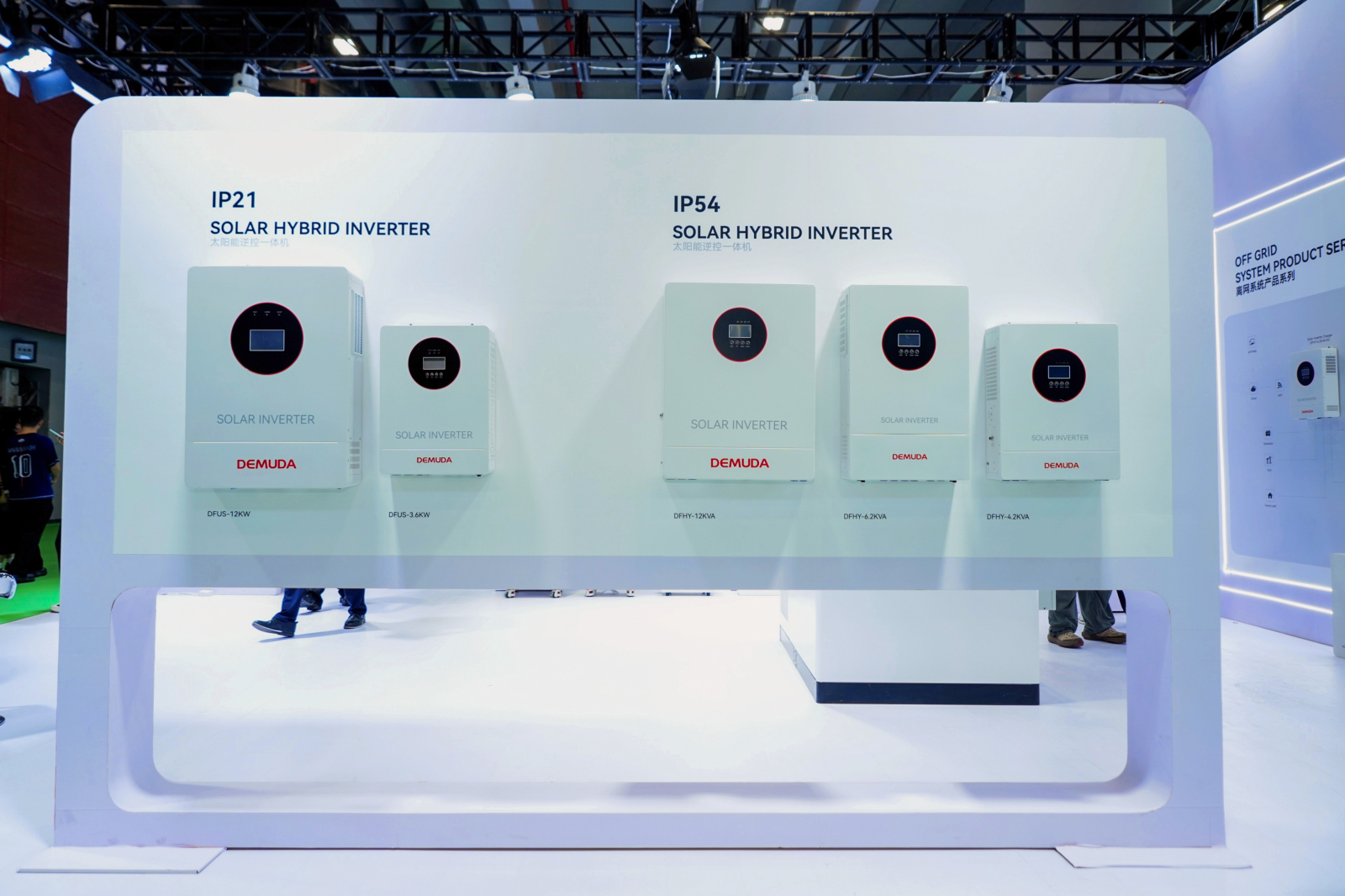
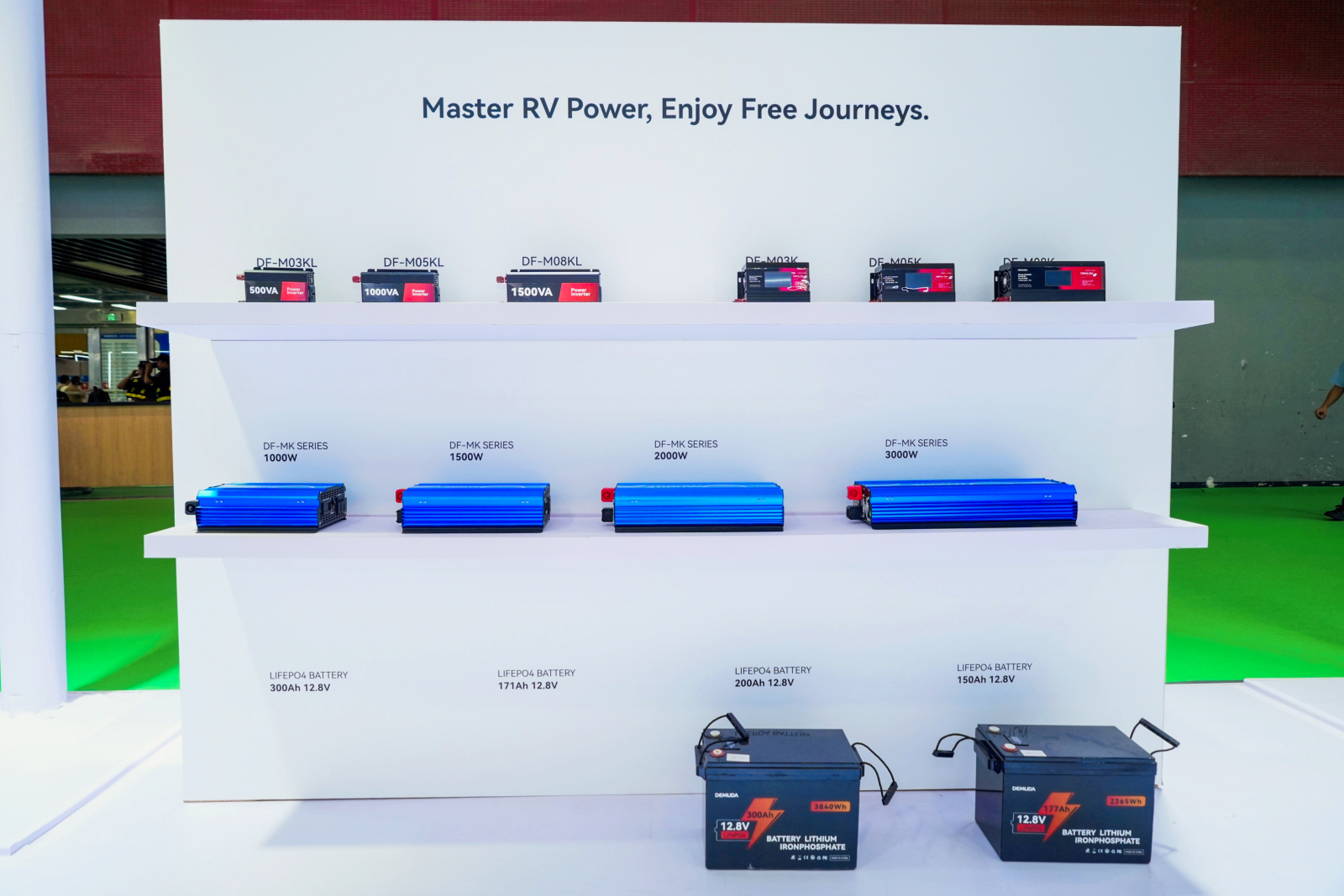
The inverter decides whether a solar-plus-storage system connects cleanly at all. DEMUDA's hybrid range covers three directions: 6kW, 8kW, 10kW and 12kW low-voltage single-phase hybrid inverters for single-phase residential and small commercial supply; 6kW to 12kW low-voltage three-phase hybrid inverters for smaller sites with a three-phase supply; and 10kW to 60kW high-voltage three-phase hybrid inverters for higher-power residential, commercial and light industrial rooftop projects. The same family also includes 120VAC/230VAC, 1–12kW low-voltage single-phase hybrids, 3.6kW–12kW US-spec hybrid inverters with built-in MPPT, and 300W–3000W pure sine wave inverters for off-grid and vehicle applications. The point of a hybrid model is that PV, battery and grid can be dispatched together and switched between grid-tied, off-grid and hybrid operating modes.
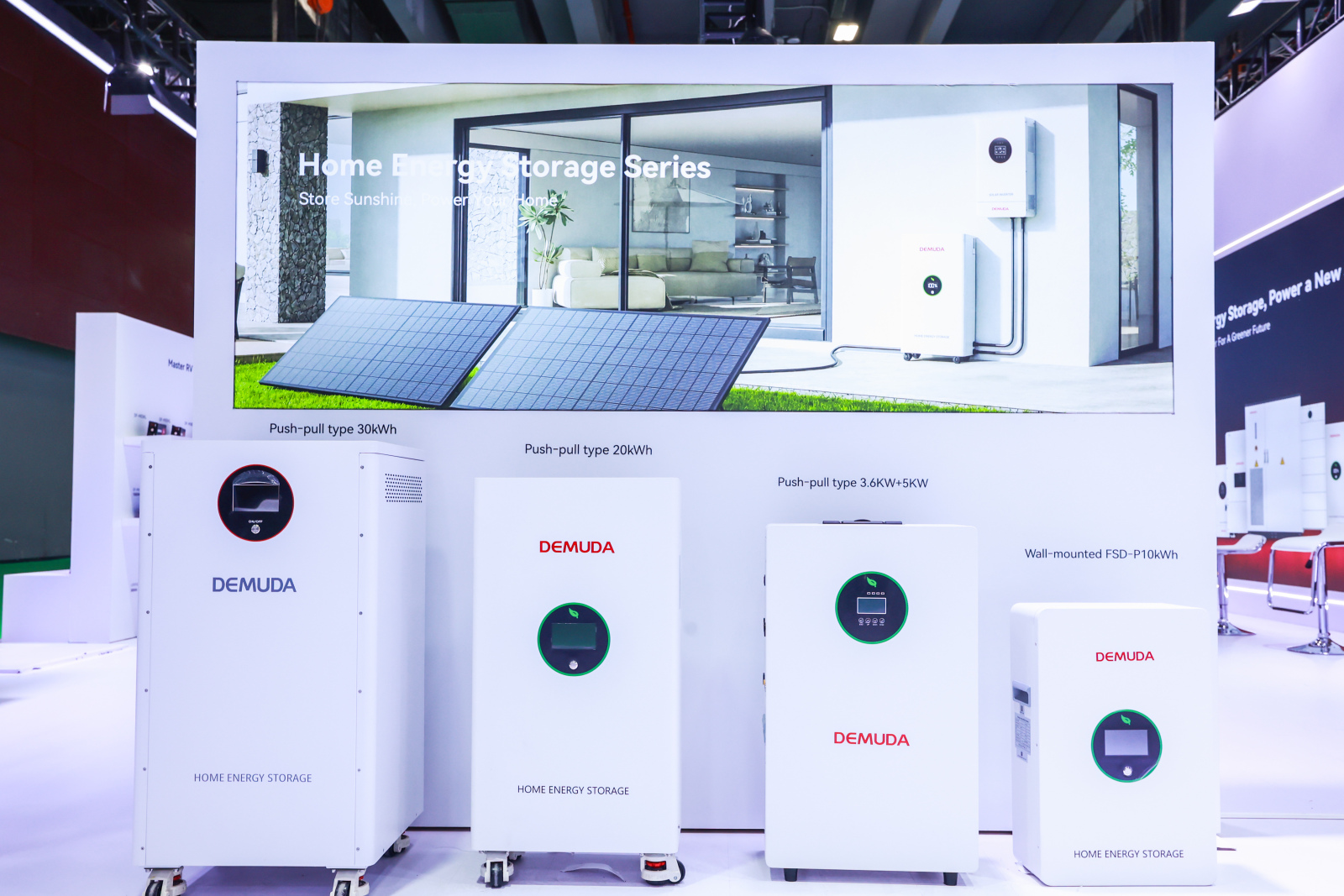
Cells are the foundation of the whole catalogue. DEMUDA's storage batteries cover both low-voltage and high-voltage platforms: a 51.2V 100Ah/200Ah, 5kWh/10kWh wall-mounted LiFePO4 battery for everyday household use; 15kWh, 20kWh and 30kWh lithium iron phosphate batteries on the 51.2V platform using Grade A cells for longer-duration self-consumption and backup; a 5kWh 51.2V 100Ah high-voltage rack-mounted battery and a 5kWh 51.2V 105Ah low-voltage rack-mounted battery for the two voltage architectures respectively; and 143kWh, 172kWh, 200kWh and 215kWh high-voltage rack-mounted batteries for commercial, industrial and microgrid projects that need stacked groups and straightforward later expansion.
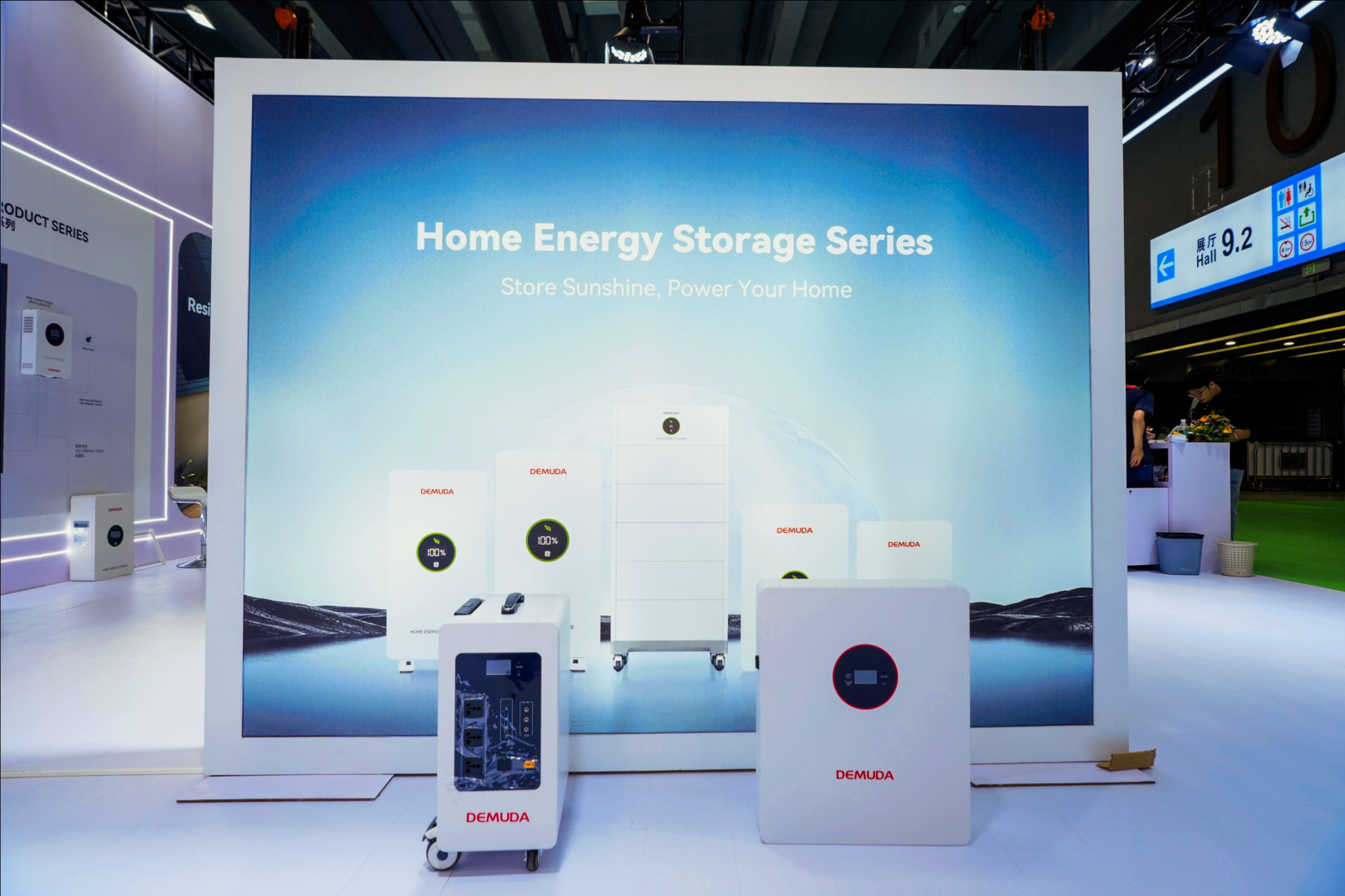
The value of an all-in-one unit is that the inverter, battery, energy management and protection sit inside one enclosure — less on-site wiring, fewer installation steps and a smaller footprint. DEMUDA's range starts residentially with a 1.8kW/4kWh wall-mounted household ESS, a 6kW/16kWh all-in-one home energy storage system and a 3.6kW/5kWh and 8kWh all-in-one solar UPS power station, then scales into commercial and industrial formats: a 30kW/50kWh all-in-one storage cabinet, a 50kW/100kWh all-in-one C&I cabinet and a 100kW/215kWh inverter-battery all-in-one system. Scenario-configured packages include a 4.2kW + 5kWh off-grid system, a 12kW + 15kWh hybrid grid system and a 3.6kW / 5.324kWh off-grid system.
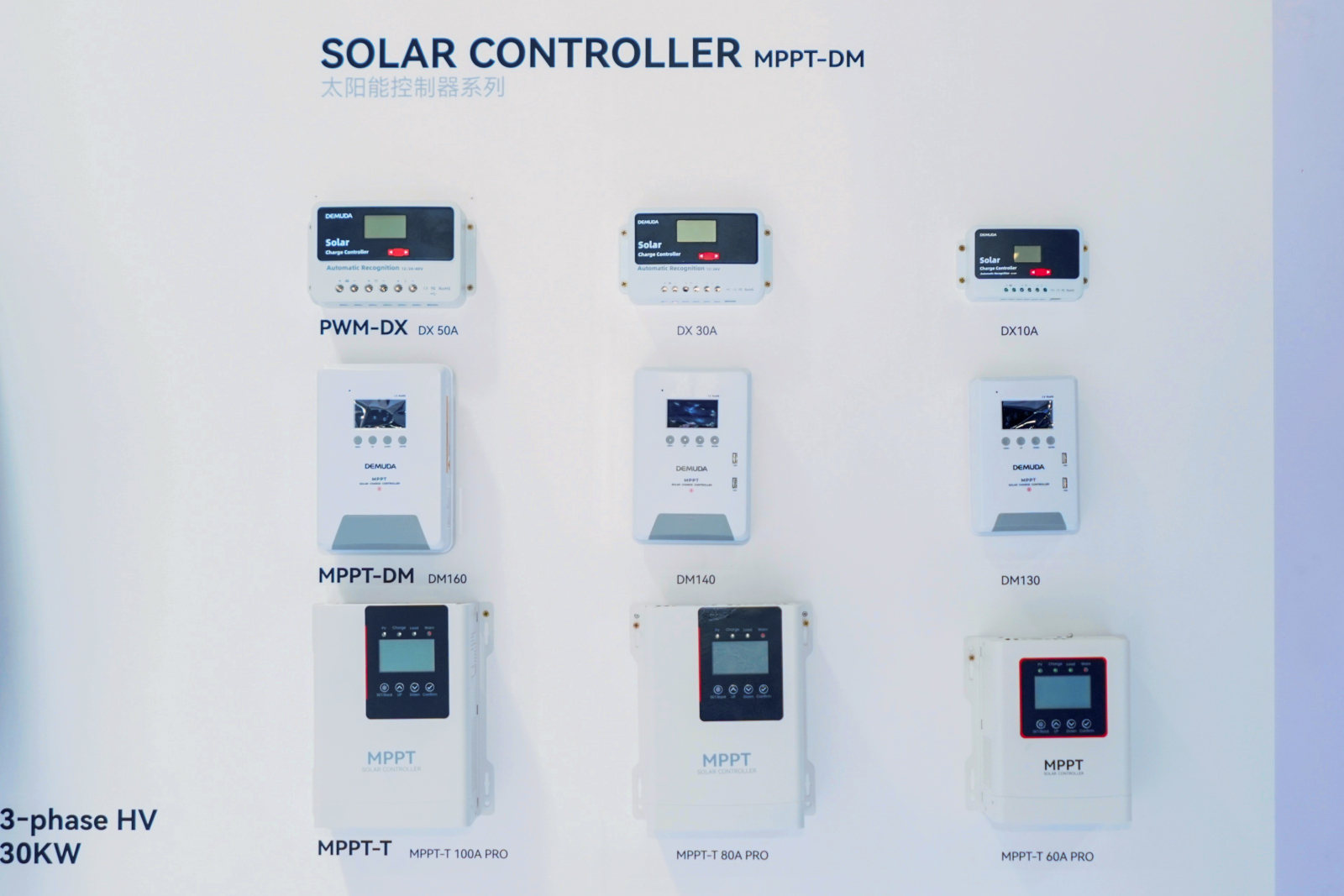
The controller turns the fluctuating voltage coming off an array into something a battery can accept. DEMUDA supplies both technology routes. On the MPPT side the range covers 10A–80A MPPT controllers, 30A–60A MPPT-DM, 30A–120A MPPT-T and 40A–120A MPPT-T PRO; on the PWM side it covers 10A–60A PWM-DX, 10A–30A JS-B0, 10A–60A KDY and 10A–60A CPLS. At the same array power, MPPT harvests more energy and suits large temperature swings or higher array voltages; PWM is simpler and cheaper, which fits small off-grid systems.
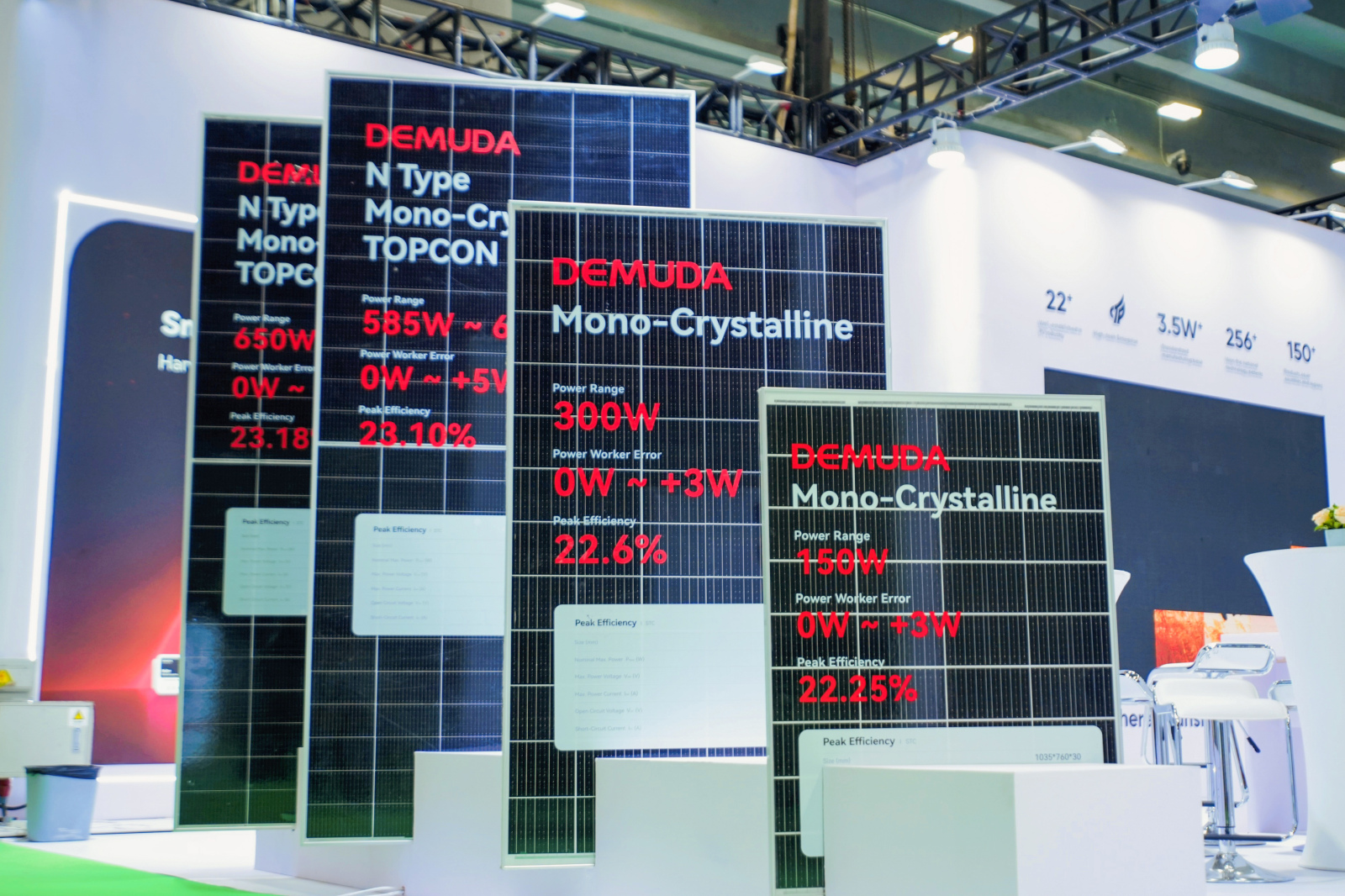
Module choice sets the ceiling on how much a system can generate. DEMUDA's panels are built mainly around N-type monocrystalline bifacial and 210 MBB monocrystalline half-cell formats: a 580W 182 N-type mono bifacial half-cell module, a 590W 210 MBB bifacial half-cell module, a 670W 210 MBB bifacial half-cell module, a 670W 210 MBB half-cell module, plus 182-format 415W, 510W and 550W models. For outdoor and emergency use there is also a 100W flexible panel and a 100W foldable panel.
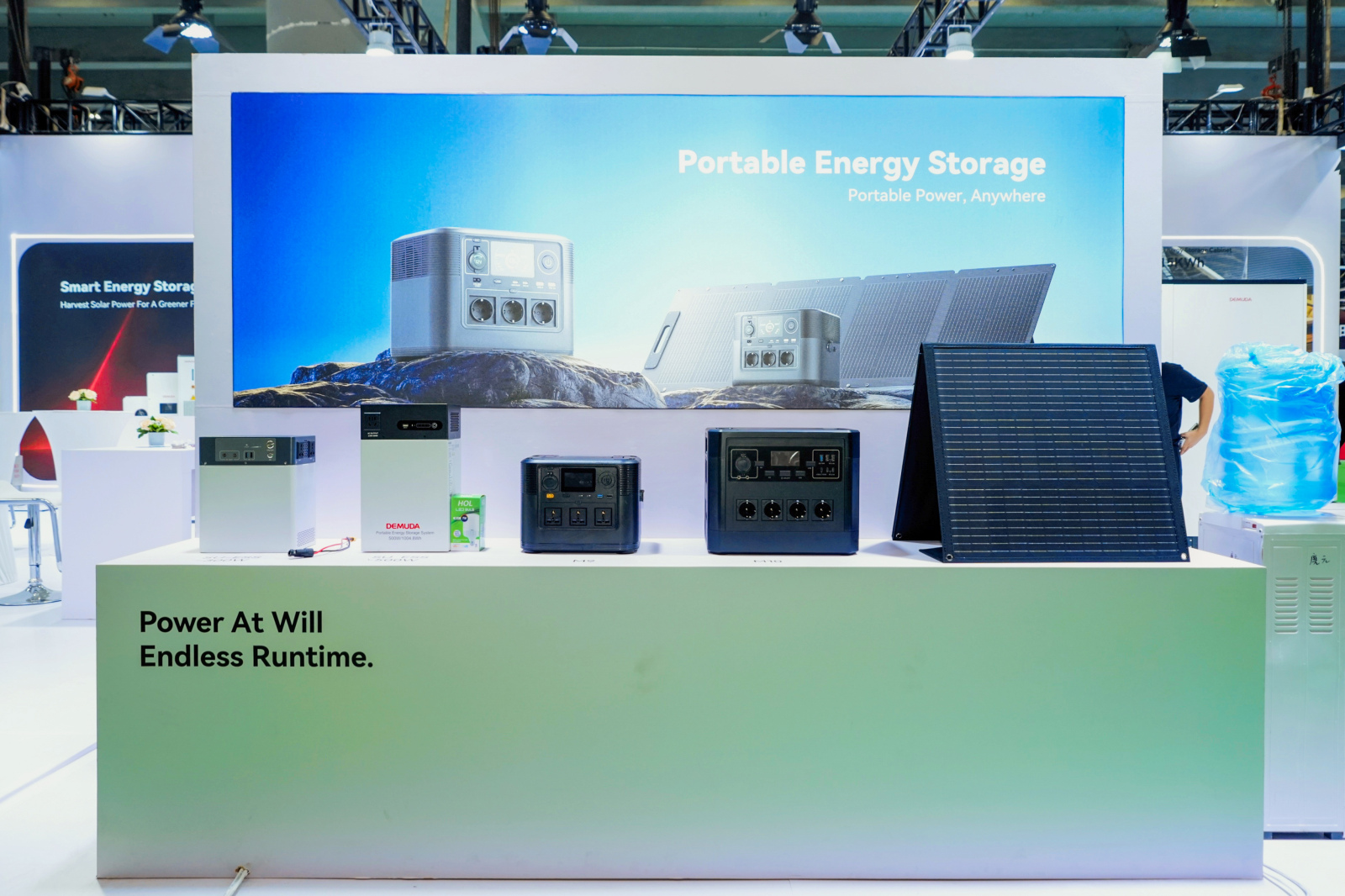
Portable power is one of the fastest-moving and most repeat-purchase-friendly categories in overseas channels. DEMUDA's line-up covers several steps: a 576Wh/600W LiFePO4 portable power station, a 1200W/1008Wh M9 solar generator, an M10 2400W/1920Wh portable power station, plus 300W/896Wh, 500W/1000Wh battery-plus-inverter and 1000W/2048Wh models. That capacity span maps onto three demands: outdoor camping, RV travel and home emergency backup.
Chargers are an accessory category, but they shape how end users actually experience a system. DEMUDA offers a 10A 12V/24V smart battery charger, 10A/20A/25A smart chargers compatible with AGM, GEL, WET and STD lead-acid batteries, an 80A smart charger for 12V/24V AGM, GEL and SLA deep-cycle batteries, a 14.6V 40A LiFePO4-specific charger, an 8A 6–12V charger compatible with both lead-acid and LiFePO4 and a 30A/35A/40A all-in-one intelligent repair charger.
Viewed together, the storage families draw a fairly clear dividing line:
Selection factor | Home energy storage | Commercial & industrial storage |
Typical capacity | 5–30kWh | 50–215kWh and above |
Representative models | 5kWh 51.2V 100Ah rack battery; 6kW/16kWh all-in-one; 15/20/30kWh LiFePO4 | 50kW/100kWh cabinet; 120kW/215kWh HV hybrid system |
Voltage architecture | 51.2V low-voltage platform alongside high-voltage racks | Mainly high-voltage racks and all-in-one cabinets |
Primary objective | Self-consumption, outage backup, lower bills | Peak-valley arbitrage, demand management, backup, green power absorption |
Delivery format | Rack batteries, all-in-one units | Cabinets, containerized systems |
Expansion method | Parallel racks, added unit by unit | System-level paralleling, cabinets added as needed |
Buyer priorities | Easy installation, complete certification, service response | Cycle life, system efficiency, system design, lead time |
The real difference is not "small versus large" but three things. First, voltage architecture: low-voltage designs simplify installation and expansion on the residential side, while high-voltage designs reduce current losses and raise system efficiency on the C&I side. Second, operating strategy: homes care about the self-consumption ratio and reliable switching during an outage, while businesses care about returns from peak-valley arbitrage and demand management. Third, delivery format: homes can reorder a single unit, whereas C&I projects usually need a complete system design and on-site guidance.
For export customers, specifications are only the entry ticket — the process decides whether a partnership actually lands. DEMUDA's published OEM/ODM flow has five stages.
The first is demand communication (1–3 days): collecting the customer's power requirements, application scenario and budget. The second is solution design (1–2 days): calculating system capacity, optimizing the architecture and delivering a complete solution with a configuration list. The third is technical confirmation (2–3 days): confirming key parameters item by item and forming a technical agreement. The fourth is manufacturing and delivery (15–30 days): completing production, quality inspection and logistics, with on-site installation or installation guidance provided. The fifth is after-sales support: remote monitoring, 24/7 technical support, scheduled maintenance and system upgrades.
The value of those five steps is that they retire uncertainty early. A miscalculated capacity, a missing certification document or an overlooked installation constraint becomes an entire cabinet rebuilt and an entire shipment delayed if it only surfaces after production — but costs only a few days of discussion when it is resolved in the first three stages.
Across three days, the questions at the booth clustered into four groups.
The first was compliance and customs documentation. Overseas projects ultimately have to clear the local grid operator and customs, and the questions were most detailed here: whether certifications such as UN38.3, IEC 62619 and CE are complete and whether a full document pack can ship with the goods.
The second was paralleling and later expansion. Buyers were less interested in how much to order now than in whether they could add more six months later. The paralleling capability of rack batteries and whether a cabinet supports system-level paralleling directly shape the form of follow-up orders.
The third was scenario matching. Two off-grid projects are not the same thing: a telecom base station, a home backup system and farm irrigation have different requirements, and buyers want a solution configured for the scenario rather than a list of parameters they have to assemble themselves.
The fourth was lead time and after-sales response. How long from signing the technical agreement to the equipment arriving at port, who supports the product if something goes wrong, and whether remote monitoring is included — these answers often influence the decision more than price does.
DEMUDA is headquartered in Guangzhou, with a business built around solar inverters, controllers, energy storage batteries and solar-plus-storage systems, and has shifted its focus in recent years toward overseas channels. The company has launched a global distributor recruitment program offering brand authorization, product supply, technical support and after-sales protection; it also entered a deeper partnership with Yanzhen Trade under a "brand + channel + service" model, covering eight overseas markets with a combined population of roughly 200 million, where Yanzhen Trade was appointed exclusive agent.
For DEMUDA, an exhibition is not an annual appearance but a chance to put products, solutions and service capability on the same table and let the market test them. The three days are over; the new connections continue — as the booth put it: CHASE THE LIGHT, FORGE NEW PATHS. Teams are already following up on the conversations started at the booth.

Seven product families: solar inverters, energy storage batteries, all-in-one inverter-storage systems, solar charge controllers, solar panels, portable power stations and battery chargers. Specific models include 6kW–60kW hybrid inverters, 5kWh–215kWh LiFePO4 storage batteries, all-in-one systems from 1.8kW/4kWh up to 100kW/215kWh, 10A–120A MPPT and PWM controllers, 415W–670W N-type bifacial modules, 576Wh–2048Wh portable power stations and 10A–80A smart chargers.
Low-voltage single-phase hybrid inverters cover 6kW, 8kW, 10kW and 12kW. Low-voltage three-phase hybrid inverters cover the same 6kW to 12kW range. High-voltage three-phase hybrid inverters cover 10kW, 20kW, 30kW, 40kW, 50kW and 60kW. The family also includes 1–12kW low-voltage single-phase hybrids and 300W–3000W pure sine wave inverters.
Decide on array power and budget. At the same array power MPPT harvests more energy, which suits large temperature swings, higher array voltages or bigger systems — DEMUDA's MPPT range covers 10A–120A. PWM is simpler and cheaper, which suits small off-grid systems — DEMUDA's PWM range covers 10A–60A.
By capacity and operating strategy. Home systems generally sit in the 5–30kWh range and are driven by self-consumption and outage backup. C&I systems generally start above 50kWh and are driven by peak-valley arbitrage, demand charge management and green power absorption.
Yes — OEM/ODM is available. The flow runs through demand communication (1–3 days), solution design (1–2 days), technical confirmation (2–3 days), manufacturing and delivery (15–30 days), and long-term after-sales support including remote monitoring, 24/7 technical support and scheduled maintenance.
Product specifications and project news are published on the official website at https://www.dmdsolar.com/, and direct contact is available at +86-15899956967 / admin@dmdpower.cn.