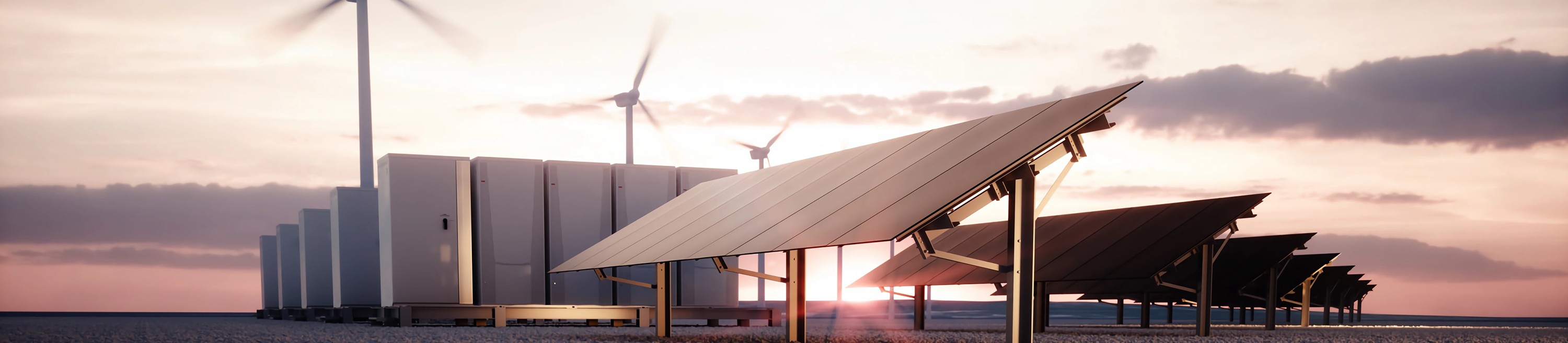


Envision (2026-11-09) signed with German developer ju:niz Energy to build the 442 MWh Smareg 13 battery storage project in Bavaria on 700 Ah+ cells with grid-forming capability; BSW-Solar data shows Germany's large-scale storage grew 3.8 GWh in the first three quarters, up roughly 350% year on year and overtaking residential storage for the first time.
1. The order itself: a third joint project, approaching 600 MWh in total
On 9 November 2026, Envision Technology Group and German storage developer ju:niz Energy renewed their strategic partnership to co-develop the 442 MWh Smareg 13 (Vöhringen II) battery storage project in Bavaria (Envision, 2026-11-12; Energy-Storage.News, 2026-11-11).
Key facts (Envision, 2026-11-12):
Project element | Details |
Project name | Smareg 13 (Vöhringen II), Bavaria, Germany |
Scale | 442 MWh, supporting 4-hour duration |
System platform | Envision Gen 8 BESS, modular and low-noise design |
Core component | Envision AESC 700 Ah+ large-format cells |
Grid capability | Grid-forming capability tailored to German market requirements |
Partnership depth | Third joint project; combined scale approaching 600 MWh once delivered |
2. Signal one: 700 Ah+ cells move from showcase to continuous delivery
The most notable part of this order is not the scale — it is the cell. The 700 Ah+ large-format cell does more than raise per-cell energy: at the same system scale, the number of cells, connection points and overall system complexity all fall, shrinking site footprint and balance-of-plant (BOP) work (Envision, 2026-11-12).
Supply is keeping pace: Envision AESC's Yichang gigafactory began production in July 2026, and the first mass-produced 700 Ah+ cells were shipped to Germany immediately after rollout — more than half of the phase-one capacity is already locked by overseas orders. Envision says cell line yield and bulk delivery capability have been validated, with supply to scale alongside Gen 8's overseas order book (Envision, 2026-11-12).
In the transition window from 300 Ah+ to 700 Ah+ storage cells, whether large cells can keep winning high-quality overseas orders is becoming the decisive trend variable. With all three Envision–ju:niz projects based on Gen 8 and 700 Ah+ cells as the fixed configuration, large-cell exports have moved from "showcase" to "continuous delivery".
3. Signal two: Germany's large-scale storage overtakes residential for the first time
According to the German Solar Industry Association (BSW-Solar), Germany added 3.8 GWh of large-scale storage in the first three quarters of 2026, up roughly 350% year on year — exceeding residential storage additions for the first time (cited in Envision's release, 2026-11-12).
This matches the broader European rhythm. As renewable penetration rises, the German power system needs ever more flexible balancing resources, and large storage projects must also meet strict interconnection requirements and environmental standards — testing vendors on technology, engineering and localized delivery. Envision has accordingly built out a local operating setup covering sales, engineering, project delivery and grid coordination, following VDE technical and regulatory requirements (Envision, 2026-11-12).
For European buyers, the message is that supplier selection criteria for large-scale storage are shifting from "cell price" to a combination of interconnection adaptability, local delivery capability and long-term supply certainty.
4. Signal three: grid-forming is becoming the entry ticket for European BESS
The Gen 8 system in Smareg 13 provides grid-forming capability tailored to the German market, supporting grid stability, system resilience and renewable absorption (Envision, 2026-11-12). ju:niz Energy COO Vural Oezcan stated in the announcement that the project "combines 4-hour storage technology with grid-forming capability to help improve the flexibility and stability of the German grid".
Grid-forming storage is becoming a hard requirement for grid-side projects across Europe — consistent with the direction in China's 15th Five-Year Plan storage scheme. For Chinese systems exporting to Europe, grid-forming capability and grid-code certification are moving from differentiating selling points to baseline configuration.
5. What this means for European C&I and residential storage buyers
Technology evolution in large-scale storage transmits downstream. Based on this order and the German market data, we draw the following conclusions (analytical judgment):
· Large-cell cost logic will reach C&I storage: system cost reductions from fewer cells and less BOP will eventually show up in the price and footprint competitiveness of C&I all-in-one cabinets.
· 4-hour duration is becoming the mainstream configuration: German utility-scale projects standardize on 4 hours; C&I duration choices are converging toward 3–4 hours.
· Localization and long-term supply commitments carry more weight: European developers increasingly value vendors' local teams, spare parts and locked-in long-term capacity.
DEMUDA's C&I storage products for the European market — the [50kW/100kWh all-in-one](/home/product/detail/id/77.html) and the [120kW/215kWh all-in-one](/home/product/detail/id/97.html) — use LFP chemistry with modular cabinet design and offer OEM/ODM customization; we are tracking the maturation of large-cell supply chains to introduce higher-density cell options into the C&I line at the right time. For more on the European market, see our analyses of [European C&I storage cabinets](/home/article/detail/id/242.html) and [Europe's 65 GWh storage market](/home/article/detail/id/246.html).
Frequently Asked Questions
This section covers five high-frequency search questions (index: Q1: Order size and location?; Q2: Why do 700 Ah+ cells matter?; Q3: State of the German storage market?; Q4: What is grid-forming storage?; Q5: What does this mean for buyer selection?).
Q1: How big is Envision's latest German storage order?
On 9 November 2026, Envision signed with German developer ju:niz Energy to build the 442 MWh Smareg 13 (Vöhringen II) battery storage project in Bavaria — their third joint project, bringing combined scale close to 600 MWh once delivered.
Q2: What is the advantage of 700 Ah+ cells over 300 Ah+ cells?
At the same system scale, 700 Ah+ cells reduce cell count, connection points and system complexity, shrinking site footprint and balance-of-plant work — lowering both system cost and O&M complexity. Envision AESC's Yichang gigafactory started production in July 2026 and shipped its first mass-produced 700 Ah+ cells to Germany.
Q3: What is the current state of Germany's large-scale storage market?
According to the German Solar Industry Association, Germany added 3.8 GWh of large-scale storage in the first three quarters of 2026, up roughly 350% year on year — overtaking residential storage additions for the first time. The demand structure is shifting from residential-led to large-scale acceleration.
Q4: What is grid-forming storage, and why do German projects require it?
Grid-forming storage actively establishes voltage and frequency references to support grid stability, rather than merely following the grid. As renewable penetration rises and synchronous generation declines, markets like Germany impose hard grid-support requirements on new storage; grid-forming capability is becoming an entry condition for large projects.
Q5: What does this order imply for C&I storage buyer selection?
Three points: first, system cost reductions from large cells will eventually reach C&I all-in-one cabinets; second, 4-hour duration is becoming Europe's mainstream configuration; third, vendors' localized delivery and long-term supply capability carry rising weight in evaluations — grid-code compliance and local service should be core selection criteria.