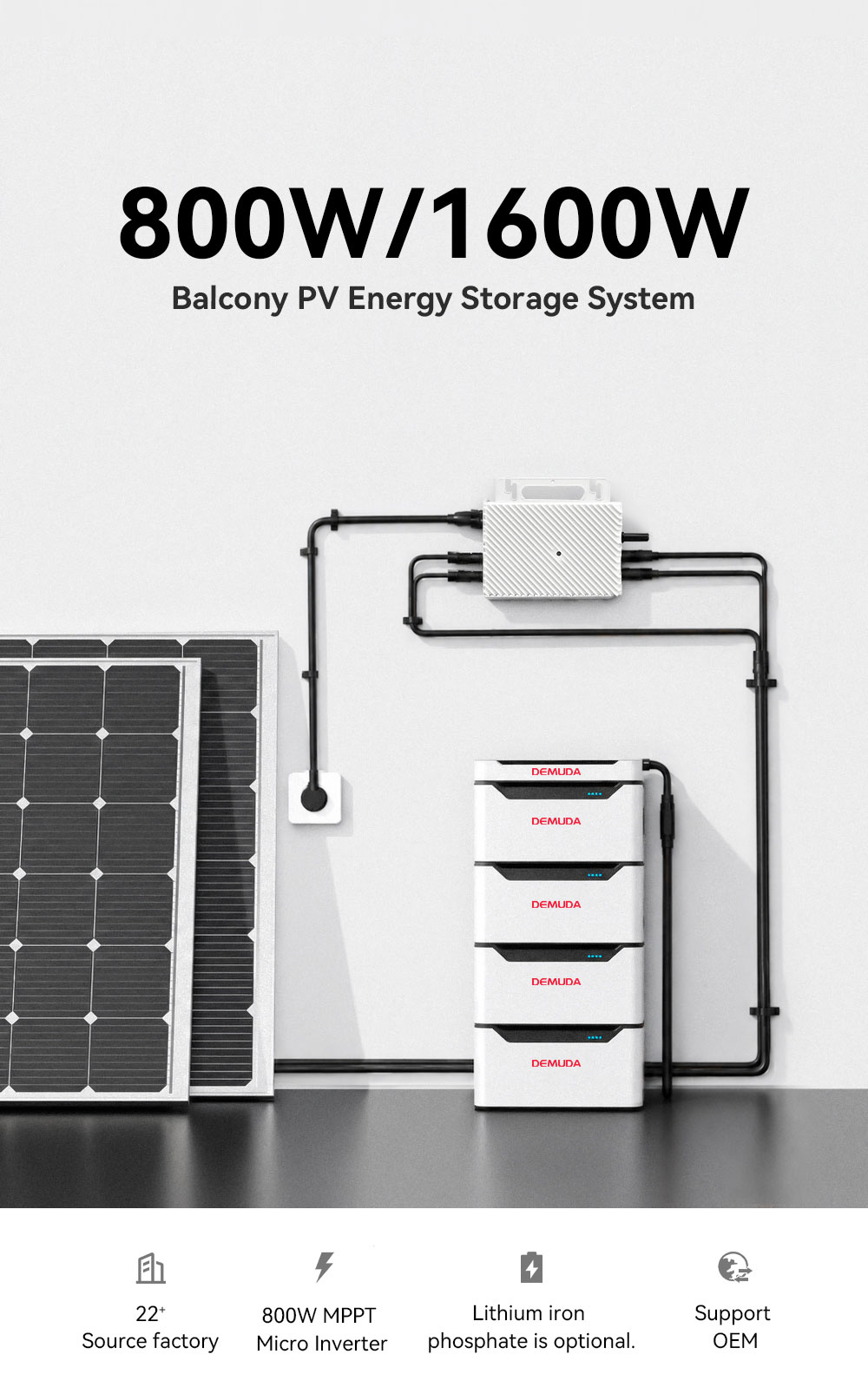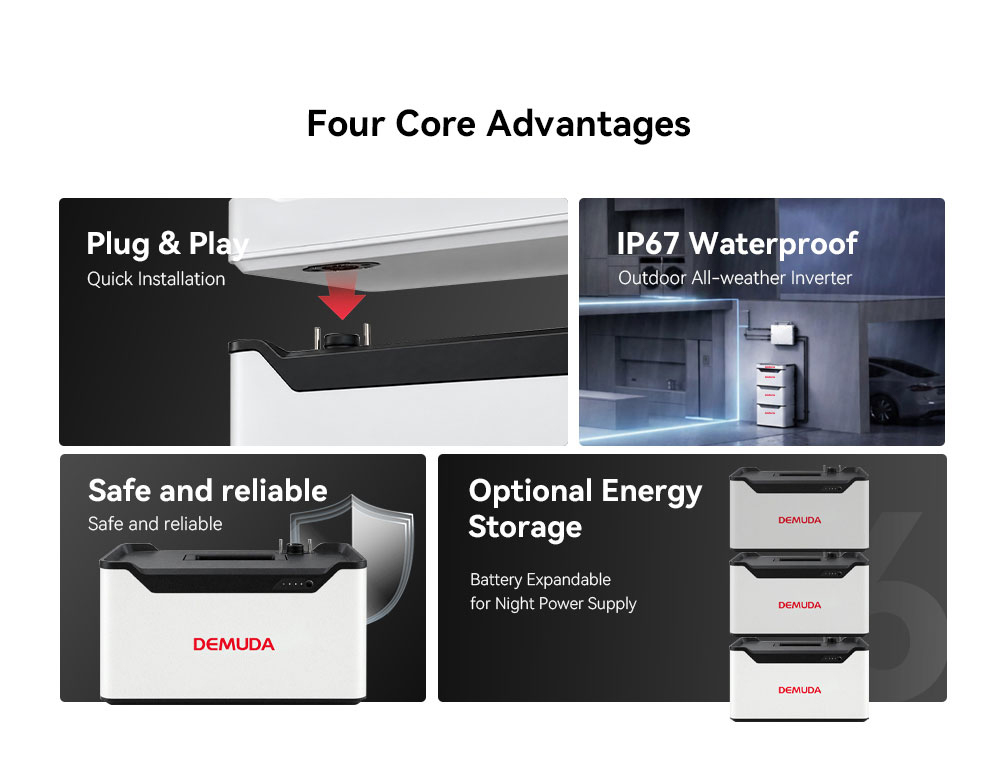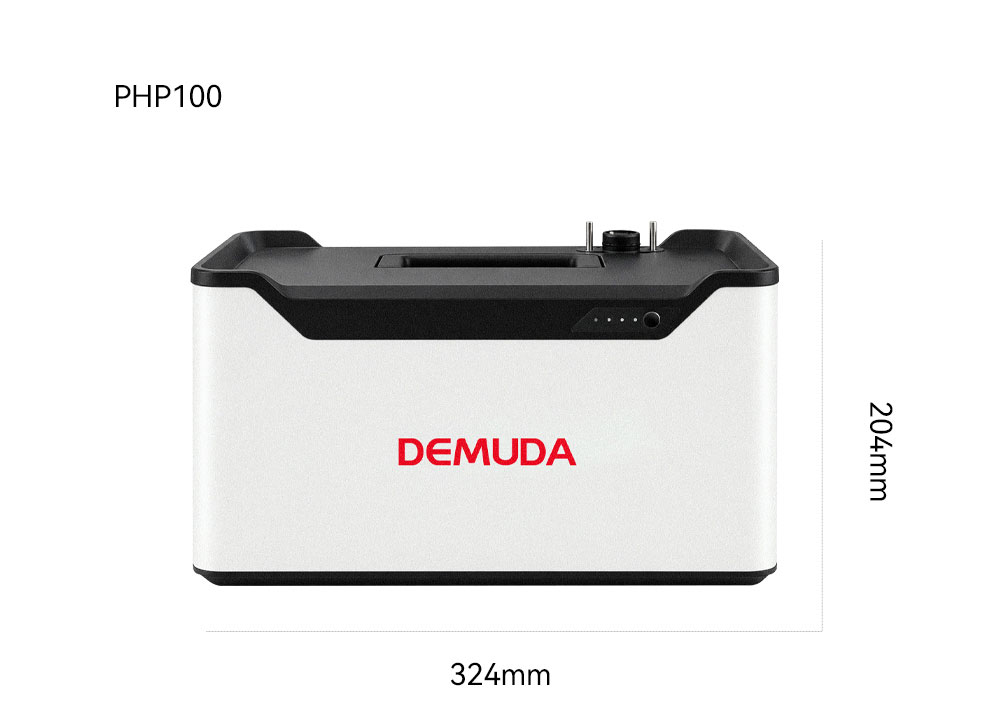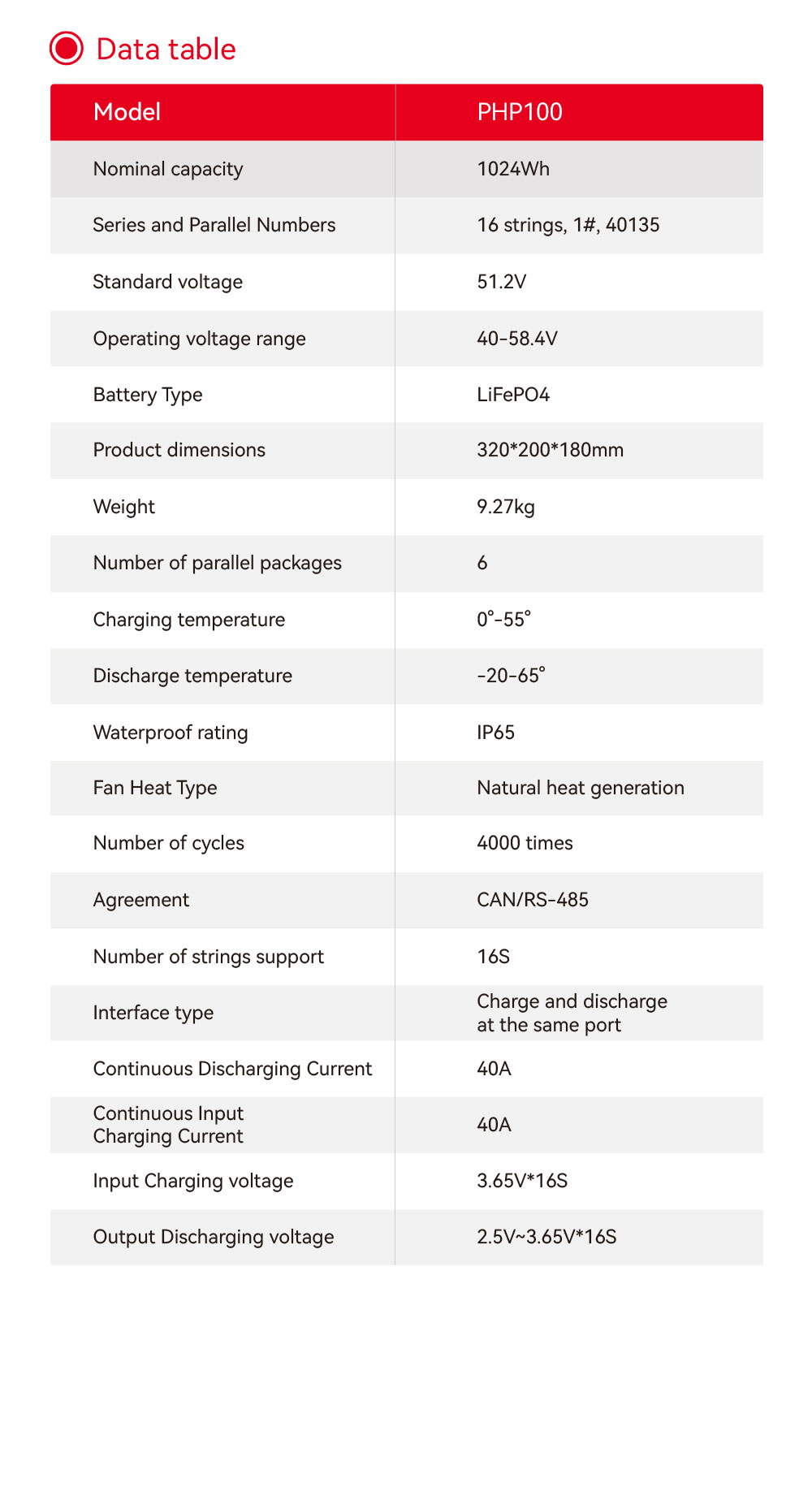


1. DEMUDA 1.024kWh battery pack (1 kWh)
Specification: 16 strings, nominal 51.2V, capacity 1024Wh; BMS maximum continuous current 40A;
Protection: IP65 waterproof, with handle; Equipped with overvoltage, overcurrent, and overtemperature protection, automatically cutting off discharge after 5 seconds of communication interruption;
Communication: Isolation 485, CAN, 4G module interfaces are standard, supporting upper computer and cloud based reading of battery data;
Special mode: Storage and transportation mode, automatically enters low-power sleep mode after timing to meet voltage, no charging and discharging, and no communication conditions, with a leakage current of only 70-100 μ A; Support automatic balancing of battery cells;
Accuracy: SOC accuracy ± 5%.
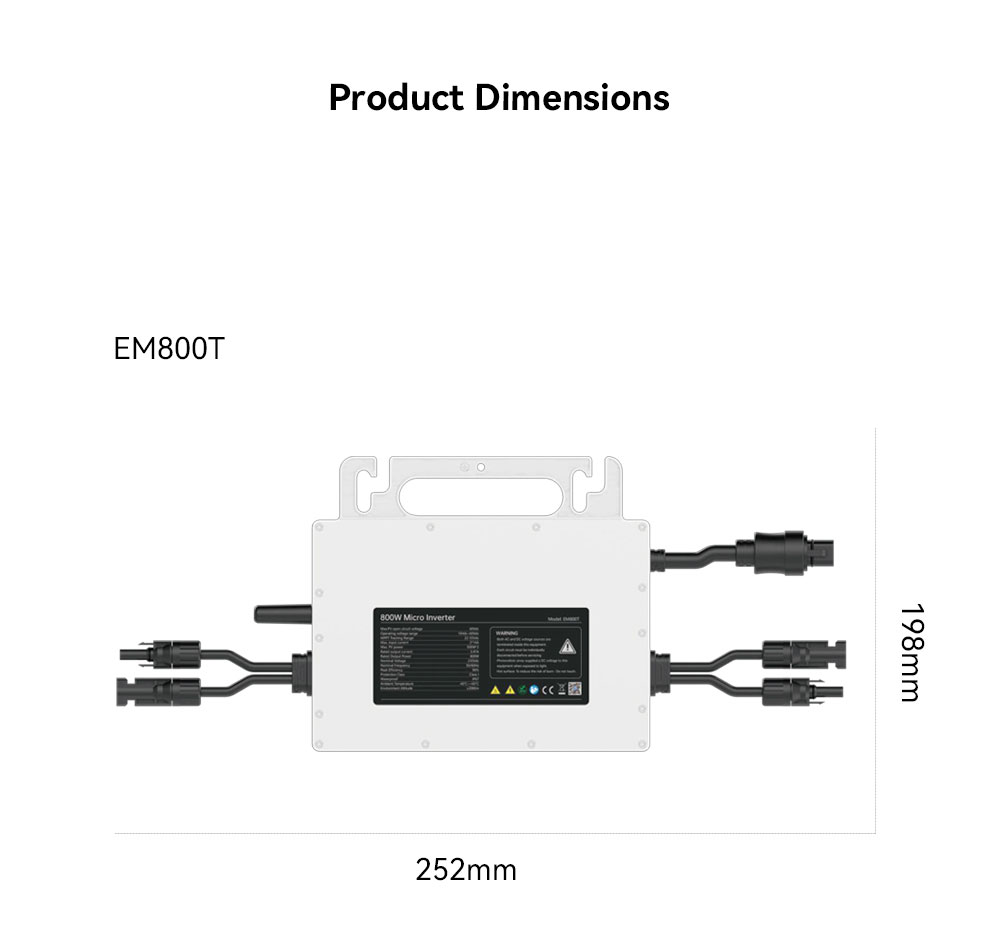
2. EM800W grid connected micro inverter
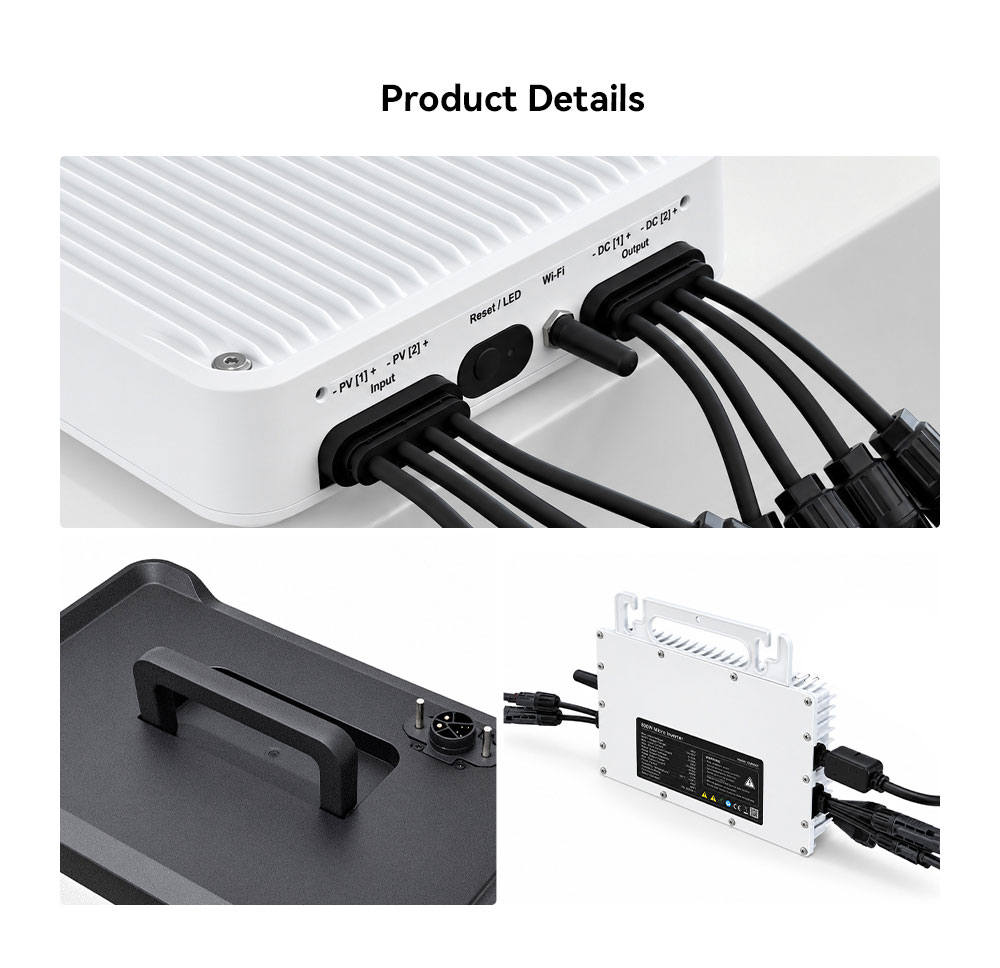
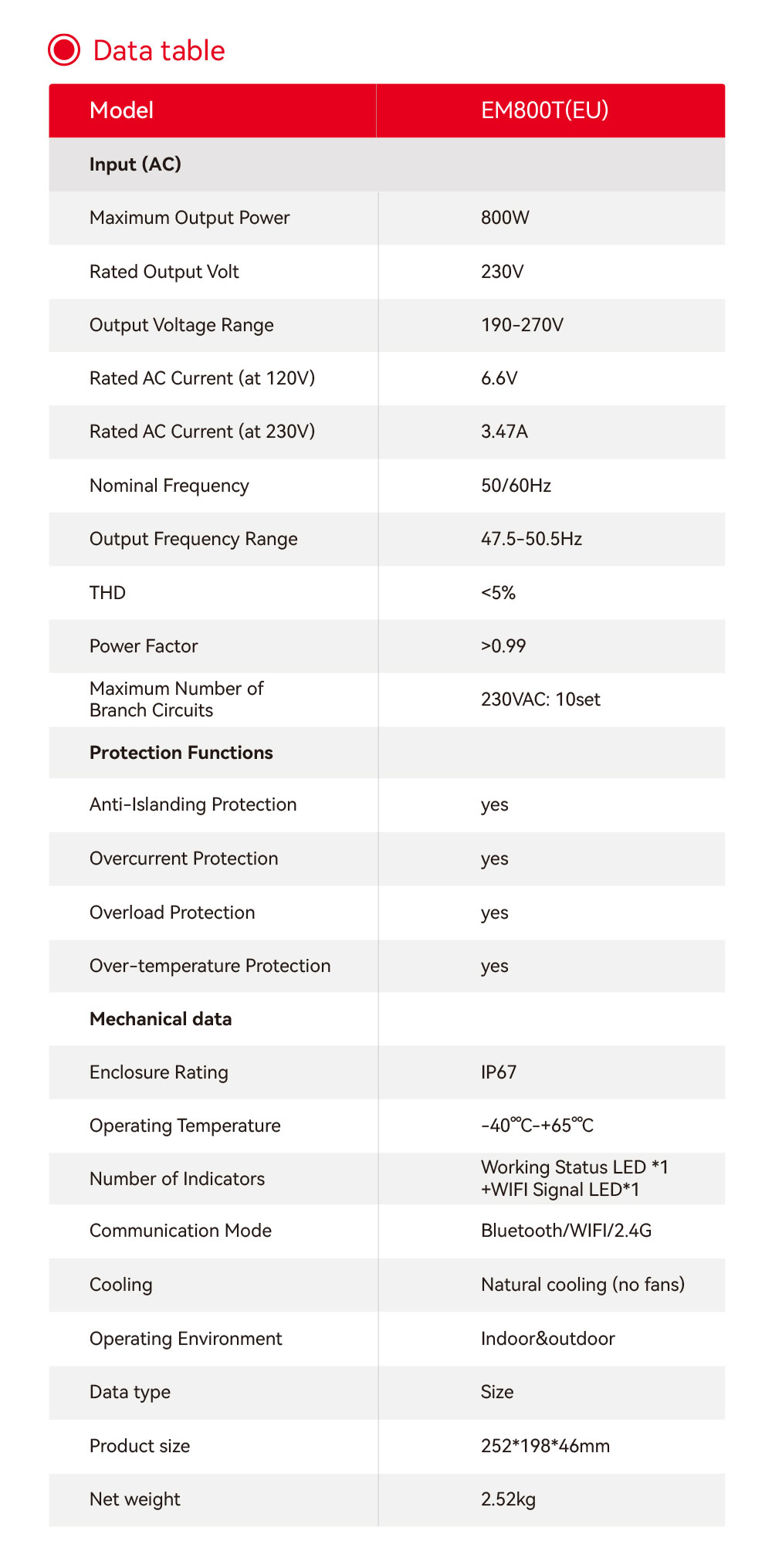
DC input: 2-channel MC4, compatible with 275-530W photovoltaic panels x 2, MPPT efficiency>99.5%;
Communication output: rated 800W, output 230V, supports 50/60Hz automatic recognition and locking;
Protection: IP67 die-casting shell, naturally cooled without fan; Complete grid protection: islanding, overvoltage, undervoltage, overclocking, underflocking, overheating, etc;
Networking: Up to 4 12AWG AC cables can be connected in parallel, and up to 8 10AWG cables can be connected in parallel.
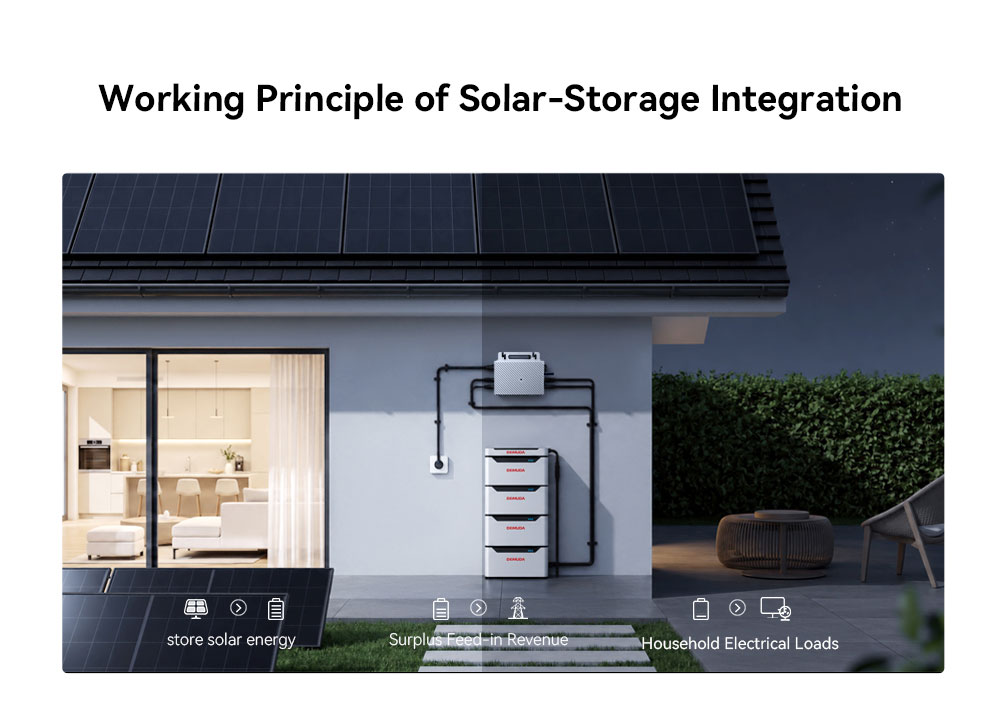
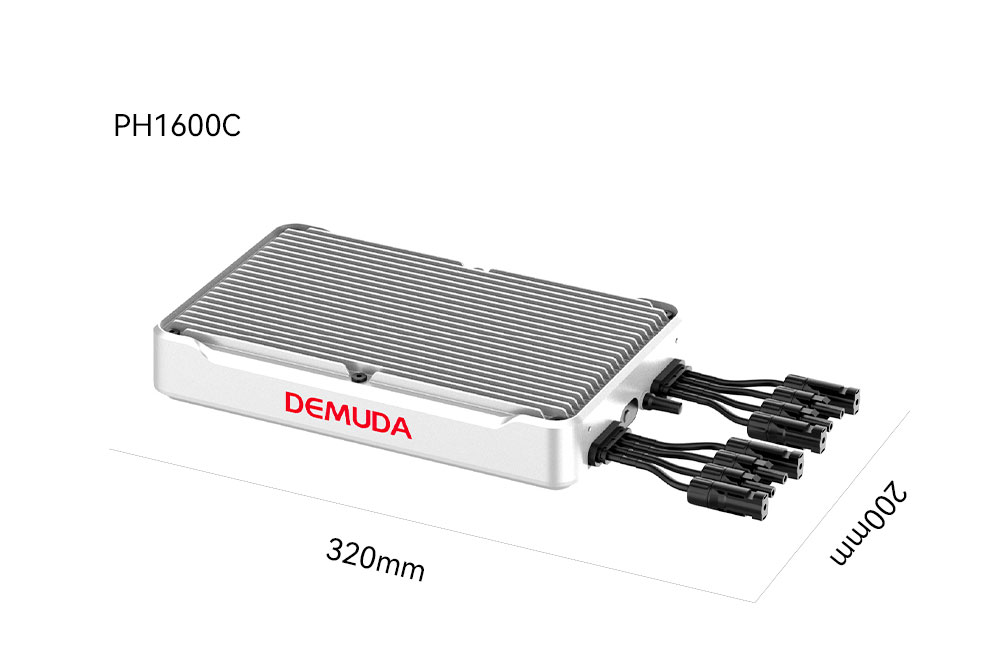
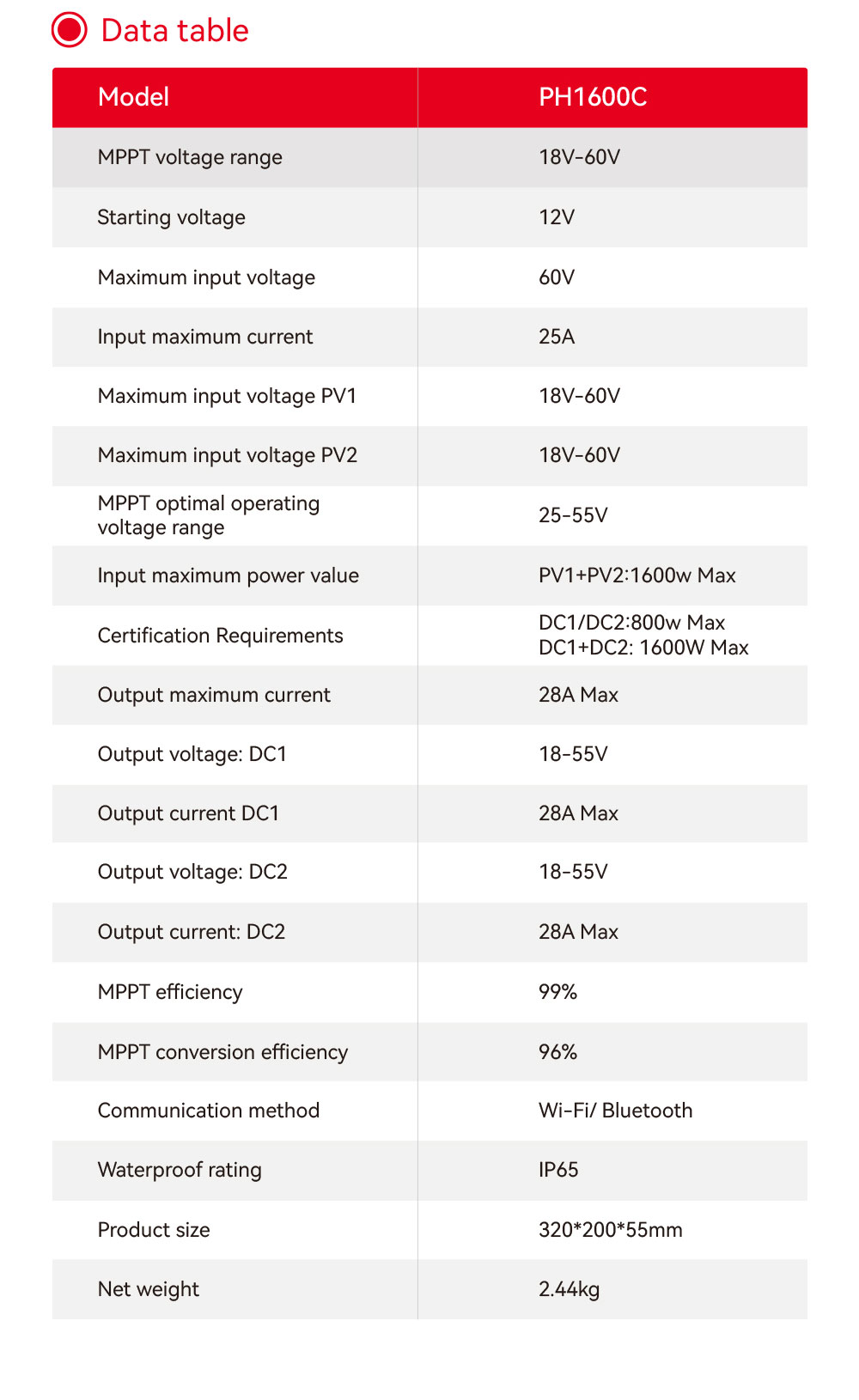
3.1600C energy storage host
Realize the linkage between photovoltaics, battery packs, and the power grid; Supports parallel connection of multiple battery packs, and can intelligently rotate charging and discharging according to the number of cycles;
Support OTA upgrade of the entire machine and BMS; Equipped with complete power on self-test logic.
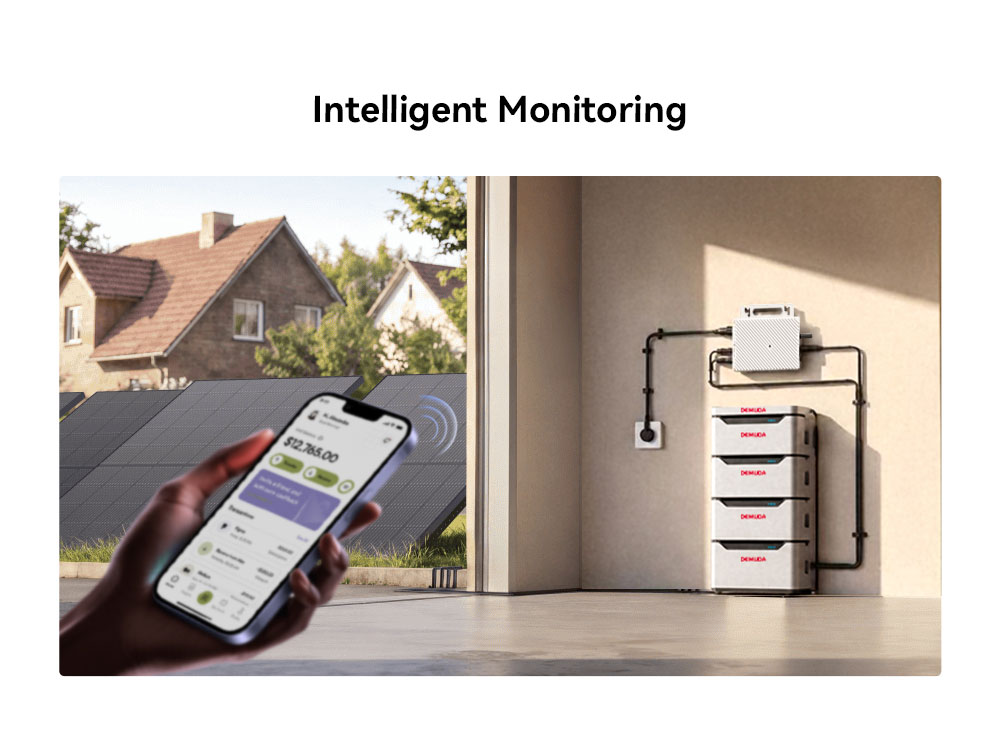
4. APP&Cloud Features
Real time monitoring: photovoltaic voltage, current, power, battery pack BMS data, inverter grid side voltage/frequency/power, equipment temperature; Report data every 30 seconds.
Data storage: Daily (7-day cycle), monthly (36 month cycle), and annual (5-year cycle) power generation statistics can be used to calculate power generation revenue.
Alarm management: Fault pop-up alarm, accompanied by handling instructions; After the fault is repaired, keep records for easy problem tracing.
RTC time synchronization: The device automatically connects to the network and calibrates the local time when powered on.