




Selecting inverters according to different application scenarios can make the process much simpler for non-professionals. Inverters are mainly divided into four types: grid-connected, off-grid, hybrid, and micro-inverters, suitable for different scenarios:
1.Ordinary households (grid-connected power generation, without batteries)
●Applicable scenarios:
There is a grid at home, and you want to install photovoltaics to save electricity costs
Less electricity is used during the day, and the excess electricity is sold to the country
●Recommended inverter: grid-connected inverter
Advantages: cheap, high efficiency (more than 98%)
Disadvantages: cannot be used when there is no electricity (reliant on the grid)
●Optional grid-connected inverters:
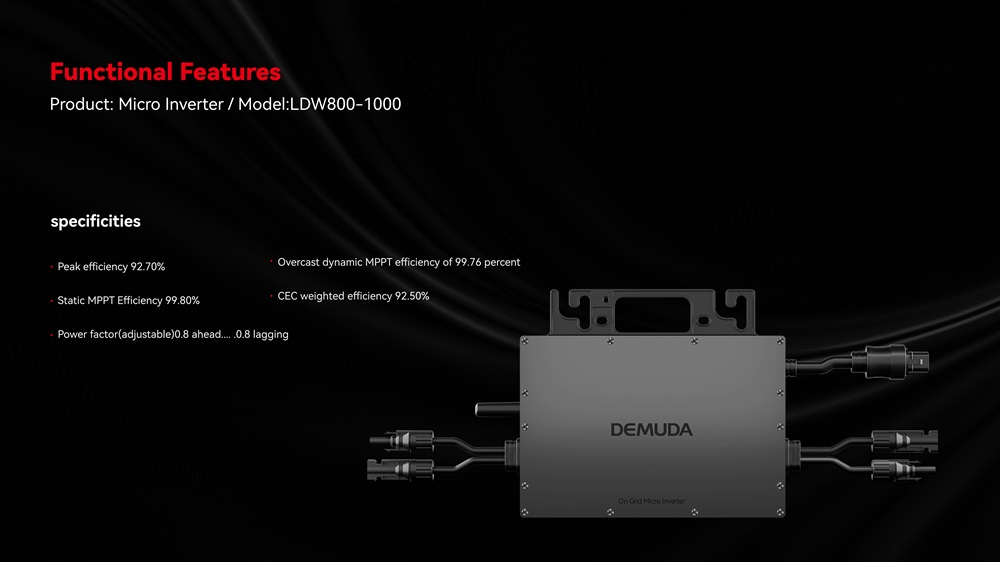
Deye:SUN-5K-SG01LP1;Growatt:MIN 3000TL-X;GOODWE: SDT G2 5kW; Solis: S5-GR1P5K; DEMUDA: OH series, WiFi communication function, support 6 units in parallel.
2. Frequent power outages/no power grid areas (off-grid power generation, with battery)
●Applicable scenarios:
Rural, mountainous, island and other areas without power grid
Frequent power outages, want to be self-sufficient
●Recommended inverter: off-grid inverter
Advantages: not dependent on the power grid, can be used even during power outages
Disadvantages: expensive (need to be equipped with batteries), slightly lower efficiency (90-95%)
●Optional off-grid inverters:
Deye: SUN-5K-SG01LP1; Growatt: SPF 5000 ES; GOODWE: ET 5K; Solis: RHI-5K-48ES; DEMUDA: DF series 1.5KW~6.5KW, supports multi-brand lithium battery communication protocols
3. Want to save electricity bills + prevent power outages (can be connected to the grid or off the grid, with batteries)
●Applicable scenarios:
Electricity bills are expensive (such as commercial electricity)
Want to use photovoltaic power during the day and batteries at night
●Recommended inverter: hybrid inverter
Advantages: flexible, can store and sell electricity
Disadvantages: high price
●Optional hybrid inverters:
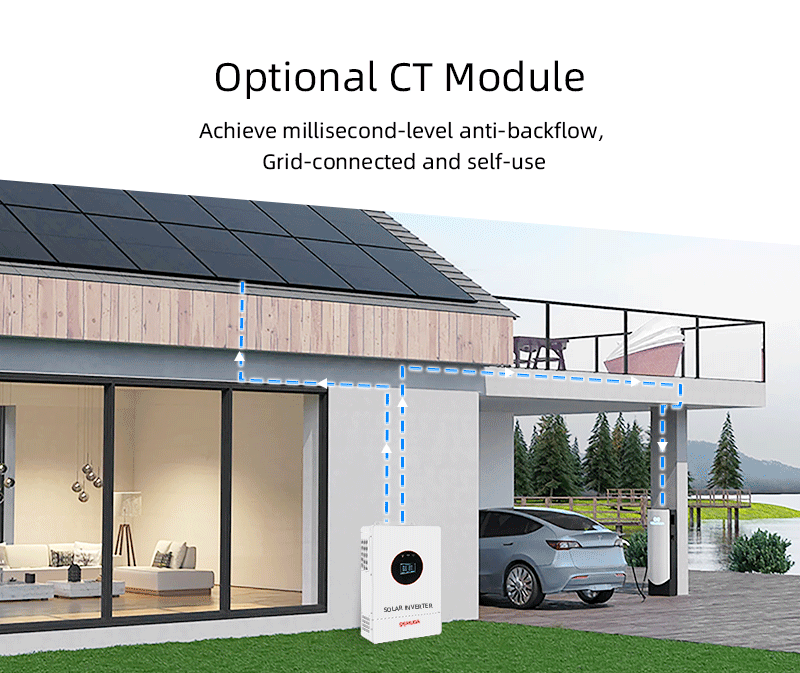
DEYE: SUN-3.6/5/6K-SG03LP1-EU;Growatt:SPE,SPH,SPM series; Solis: S6-GR1P(2-5)K-H; DEMUDA: DF series 13.KW, optional CT module, to achieve grid connection and self-use, support multiple protocols lithium batteries